Call us today!

Geogrids have quietly reshaped how we approach road construction. After years of working with these materials across dozens of projects, the pattern is clear: roads built with proper geogrid integration simply hold up better and cost less to maintain. What started as a specialized technique for problem soils has become standard practice for anyone serious about building infrastructure that lasts.
What Makes Geogrids Work in Pavement Systems
The mechanics behind geogrid performance are straightforward once you see them in action. When you place a geogrid within the base or subbase layer, the aggregate particles lock into the grid apertures. This creates a composite structure that behaves very differently from unreinforced aggregate alone.
Traffic loads get distributed across a much wider area instead of concentrating directly beneath the wheel path. The subgrade sees less stress, and the pavement structure resists the kind of localized deformation that eventually becomes rutting or fatigue cracking.
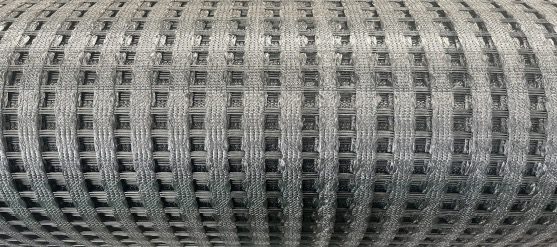
Fiberglass Geogrids and Asphalt Fiberglass Geogrid work particularly well in asphalt overlay applications. Reflective cracking from underlying pavement joints or existing cracks is one of the most persistent problems in rehabilitation projects. These products absorb and redistribute the stress that would otherwise propagate straight through the new overlay. The difference in crack development between reinforced and unreinforced sections on the same project can be striking.
Roads reinforced this way carry heavier loads and handle more traffic cycles before showing distress. Maintenance intervals stretch out. The math on lifecycle costs tends to favor the geogrid approach, though the margin varies with site conditions and material prices.
The Economics of Geogrid Integration
The cost picture for geogrids looks different depending on where you focus. Upfront, you’re adding a material and an installation step. But the aggregate savings often offset most or all of that cost immediately.
Reducing base thickness by even a few inches translates to real money when you’re hauling aggregate any distance. Fewer trucks, less fuel, shorter construction windows. Projects wrap up faster, which matters for both labor costs and traffic disruption.
| Feature | Traditional Construction | With Geogrids (Lianyi®) | Cost Impact |
|---|---|---|---|
| Aggregate Usage | High | Reduced | Significant Savings |
| Construction Time | Longer | Shorter | Labor Savings |
| Maintenance Frequency | Higher | Lower | Long-term Savings |
| Pavement Lifespan | Standard | Extended | Value Added |
| Material Cost | Standard | Reduced | Savings |
The maintenance reduction is where the long-term value really accumulates. A road that needs patching every three years versus every seven years represents a substantial difference in agency budgets and public inconvenience.
Working with Difficult Ground Conditions
Weak subgrades test every assumption about pavement design. Saturated clays, organic soils, areas with high water tables. These conditions cause differential settlement that shows up as waves and dips in the finished surface, or worse, structural failures that require complete reconstruction.
Geogrids change the equation by spreading loads and bridging over soft spots. The reinforced section acts as a stiff platform that resists the localized punching and deformation that soft soils allow. You still need to understand your subgrade conditions and design accordingly, but geogrids give you options that weren’t available before.
How do geogrids enhance the lifespan of roads?
The load distribution mechanism is the key. When aggregate particles interlock with the geogrid apertures, the composite layer spreads wheel loads across a larger footprint. Less concentrated stress means less deformation per load cycle. The subgrade stays more stable, the base maintains its density and gradation, and the surface course sees less of the movement that causes cracking and rutting. All of this adds up to more years of serviceable life before major rehabilitation becomes necessary.
Which types of geogrids are best suited for different road construction challenges?
Matching the product to the application matters. HDPE Uniaxial Geogrid handles the high tensile demands of slope reinforcement and retaining structures where loads act primarily in one direction. PP Biaxial Geogrid works well under road bases where traffic loads come from multiple directions and the grid needs strength both ways.
Asphalt reinforcement calls for different properties. Fiberglass Geogrids and Basalt Geogrid Mesh bond well with asphalt binders and resist the thermal cycling that causes reflective cracking. Combigrid products combine reinforcement with separation functions, useful when you need to keep fine subgrade soils from migrating into the aggregate base.
| Geogrid Type | Raw Material | Primary Application | Key Benefit |
|---|---|---|---|
| Asphalt Fiberglass Geogrid | Fiberglass yarns | Asphalt Reinforcement | Prevents Cracks |
| Basalt Geogrid Mesh | Basalt fiber yarns | Asphalt Reinforcement | High Strength, Durability |
| HDPE Uniaxial Geogrid | High Density Polyethylene | Slope Stabilization | High Tensile Strength |
| Combigrid | PP+PET/PP | Reinforcement & Separation | Multi-functional |
| Fiberglass Geogrids | Fiberglass yarns | Asphalt Reinforcement | Crack Prevention |
Resource Conservation and Environmental Considerations
The aggregate reduction that makes geogrids economical also carries environmental benefits. Less quarrying, fewer haul trucks, smaller carbon footprint for the construction phase. These aren’t abstract considerations anymore. Many project specifications now include sustainability metrics, and geogrids help meet them.
The extended service life compounds these benefits. Every year you delay a major rehabilitation project is a year without the resource consumption and emissions that reconstruction entails. Fewer lane closures mean less idling traffic. The cumulative effect across a road network adds up.
Current Developments in Geogrid Technology
The products available today perform better than what we had a decade ago. Polymer formulations have improved, manufacturing processes produce more consistent aperture geometry, and the range of specialized products has expanded.
Polyester Mining Geogrid and PET Welded Geogrid represent the kind of application-specific engineering that’s become possible. Mining haul roads see loading conditions that would destroy conventional pavements quickly. Railway foundations need to handle dynamic loads and resist long-term creep. Seismic zones require materials that maintain performance under cyclic loading.
Lianyi® has developed products for these demanding applications, building on the fundamental geogrid principles while optimizing for specific performance requirements.
What are the cost benefits of using geogrids in highway projects?
Highway projects operate on long planning horizons, which is where geogrid economics really shine. The initial material investment gets paid back through reduced aggregate quantities and faster construction. But the bigger savings come from extended pavement life and reduced maintenance frequency. Fewer closures mean less traffic disruption and lower user delay costs. Transportation agencies increasingly look at lifecycle costs rather than just construction costs, and that analysis tends to favor geogrid reinforcement for appropriate applications.
Partner with Lianyi® for Your Next Project
Lianyi’s geosynthetic solutions bring proven performance to road and highway construction. Feicheng Lianyi Engineering Plastics Co.,Ltd. holds ISO 9001:2015 certification and manufactures geogrids engineered for the durability and efficiency that modern infrastructure demands. Contact us to discuss your project requirements and see how our geosynthetics can deliver the performance you need. Mobile: +86 19153868161 | Email: [email protected]
How do geogrids contribute to the overall resilience of road infrastructure?
Resilience comes from the reinforcement geogrids provide to base and subgrade layers. Better load distribution reduces the stress concentrations that cause localized failures. The reinforced structure resists rutting, cracking, and the progressive deterioration that eventually requires reconstruction. Roads built this way handle heavy traffic, weather extremes, and even seismic events with less damage. The result is a transportation network that stays functional longer and recovers faster from whatever stresses it encounters.
Can geogrids be used in all types of road construction, including unpaved roads?
Geogrids work across the full spectrum of road types. Paved roads benefit from base reinforcement that extends pavement life. Unpaved roads often see even more dramatic improvements because the geogrid provides soil stabilization that soft subgrades desperately need. Haul roads, access roads, and temporary construction surfaces all become more serviceable with geogrid reinforcement. The aggregate savings on unpaved roads can be substantial since these applications often require thick granular layers to achieve adequate bearing capacity without reinforcement.
What certifications and quality standards should be considered when selecting geogrid suppliers for highway projects?
Quality assurance matters for products that will be buried in your pavement structure for decades. ISO 9001:2015 certification indicates a manufacturer has systematic quality management in place. ISO 14001:2015 covers environmental management, and OHSAS 18001:2007 addresses workplace safety. Independent testing from organizations like BV, SGS, and TRI provides third-party verification that products meet their published specifications. For highway projects where failure has serious consequences, working with certified suppliers reduces risk.