Call us today!
Blog
Lianyi®HDPE geomembrane is the most important and widely used type in the geomembrane family. It specifically refers to a flexible anti-seepage material made mainly from High-Density Polyethylene resin, with the addition of antioxidants, anti-aging agents, carbon black and other auxiliary materials, through blow molding or calendering processes.
*Extremely high anti-seepage performance
The permeability coefficient is extremely low, usually ≤1.0×10⁻¹³ cm/s, which can almost be regarded as impermeable to water, effectively blocking water, vapor, gas and harmful chemicals.
*Outstanding chemical stability
This is one of the most prominent advantages of HDPE Geomembrane. It can resist the corrosion of over 80 kinds of strong acids, strong alkalis, salts and organic solvents, including landfill leachate, industrial wastewater, oils, etc., making it have an extremely long service life in harsh chemical environments.
*Excellent resistance to environmental stress cracking:
By adding special resin, it is less likely to crack or break under long-term loads and harsh environments, and its durability far exceeds that of ordinary polyethylene.
*High mechanical strength
It features extremely high tensile strength, tear resistance, puncture resistance and elastic modulus, and is capable of withstanding significant uneven settlement of the foundation and external loads.
*Good weather resistance and anti-aging properties
By adding high-quality carbon black (typically with a content of 2% to 3%) to resist ultraviolet radiation, its service life can reach over 50 years under open-air conditions. It has good resistance to low-temperature embrittlement and is suitable for cold regions.
*Relatively high rigidity
Compared with LLDPE (linear low-density polyethylene) geomembrane, HDPE geomembrane has lower flexibility and a more “stiff” texture, which gives it an advantage in terms of laying flatness and withstanding deep covering pressure.
Advantages Of HDPE Geomembrane
*Highest safety and reliability
For high-standard anti-seepage projects (such as hazardous waste landfills), its combination of “high strength + high corrosion resistance” provides the highest level of safety guarantee.
*Low full life cycle cost
Although the initial material cost may be higher than that of some ordinary geomembranes, its extremely long service life and very low maintenance requirements make the long-term comprehensive cost very economical.
*Excellent welding performance
It is suitable for double-track hot melt welding and extrusion welding, with high weld strength. The detection methods are mature (pneumatic detection, electric spark detection), and it is easy to form a complete and reliable anti-seepage system.
*Good environmental protection performance
The material itself is non-toxic and harmless, and will not cause secondary pollution to the soil and water bodies.
Applications Of HDPE Geomembrane
*Environmental Engineering (Core Field)
(1)Municipal solid waste landfill: bottom liner system, intermediate cover, final closure cover.
(2)Safe landfill for hazardous waste/industrial waste.
(3)Sewage treatment tanks, regulating tanks, evaporation ponds.
*Water conservancy and hydropower projects
(1)Anti-seepage for reservoirs, drinking water pools and channels.
(2)Vertical anti-seepage walls for DAMS and embankments or upstream slope anti-seepage.
(3)Artificial lakes and landscape rivers.
*Mining and Energy
(1)Tailings ponds, heap leaching tanks, red mud storage yards.
(2)Secondary cofferdams for petrochemical storage tank areas and emergency pools for accidents.
(3)Crude oil and salt industry crystallization tanks.
*Municipal Affairs and Transportation
(1)Waterproofing for underground tunnels and subway projects.
(2)Waterproofing for the roof slabs of underground garages and roof gardens.
*Agriculture and Aquaculture
(1)High-standard aquaculture ponds (such as prawns and sea cucumbers).
(2)Reservoirs, irrigation channels.
Key points of construction
*Thickness selection: Common thicknesses range from 0.5mm to 3.0mm. The bottom of landfill sites usually uses geomembranes of ≥1.5mm or even 2.0mm or more. The reservoir may be selected with a diameter of 0.75mm to 1.0mm.
*Material grades: They are classified into common type, environmentally friendly type (without plasticizers), urban construction type (conforming to urban construction standards), etc. The selection should be based on the engineering specifications.
Construction core
*Base treatment: It must be flat, solid and free of sharp objects.
*Welding quality: It is the lifeline of the anti-seepage system and must be operated by professionals and equipment, and 100% weld seam inspection must be carried out.
*On-site protection: After laying, a protective layer (such as geotextile or sand) should be covered in a timely manner to prevent mechanical damage and prolonged exposure to the sun.
Summary
HDPE geomembrane is the “high-performance flagship product” among geomembranes. With its unparalleled chemical stability, extremely high mechanical strength and extremely long service life, it has become the cornerstone material for all major projects with strict and long-term requirements for anti-seepage (especially environmental protection and safety projects). When engineering is confronted with corrosive media, long-term loads or extremely high environmental safety standards, HDPE geomembrane is often the only and best choice.

Keywords:
1. Geomembrane
Lianyi®Geomembrane is a flexible anti-seepage material made of high-molecular polymers such as HDPE, LDPE, PVC, EPDM, etc. Geomembrane is widely used in civil engineering, environmental engineering and water conservancy projects, mainly serving to prevent seepage, isolate and protect.
*High impermeability
The permeability coefficient is extremely low (usually ≤10⁻¹³ m/s), which can effectively prevent the penetration of liquids and gases.
*Chemical corrosion resistance
It can resist the corrosion of acids, alkalis, salts and most organic solvents, and is suitable for complex environments.
*Anti-aging and durability
With the addition of UV resistance and antioxidants, its lifespan can reach over 50 years (taking HDPE as an example).
*Good flexibility
It can adapt to the deformation of the foundation and form a continuous anti-seepage layer through welding.
*Lightweight and easy to construct
It is lightweight (about 0.94g /cm³) and convenient for transportation and laying.
*Cost-effectiveness
Compared with traditional anti-seepage materials such as concrete, it has lower costs and faster construction.
*Environmental protection and safety
Prevent pollutant leakage and protect soil and groundwater.
*Engineering adaptability
Customizable thickness (0.3-3.0mm) and width(2-8m), suitable for complex terrains.
*Composite function
It can be combined with geotextiles to enhance puncture resistance and drainage capacity.
*Water conservancy projects: Anti-seepage for reservoirs, channels and DAMS,River course improvement Anti-seepage for seawater desalination tanks.
*Environmental Engineering: Landfill bottom/Cover layer Sewage treatment pool Anti-seepage for hazardous waste disposal sites.
*Mining engineering: Heap leaching tank, tailings pond anti-seepage,Prevent heavy metal leakage pollution.
*Agriculture and Water: Anti-seepage of Irrigation Ponds Bottom protection for aquaculture ponds Salt field seepage prevention.
*Transportation and Municipal Affairs: Tunnel Waterproofing layer Subgrade isolation Moisture-proofing for underground projects.
*Garden landscape: Anti-seepage for artificial lakes and wetland parks,Roof garden waterproofing.

Keywords:
1. Geomembrane
What’s Asphalt Reinforcement Fiberglass Geogrid?
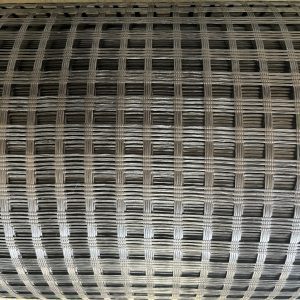
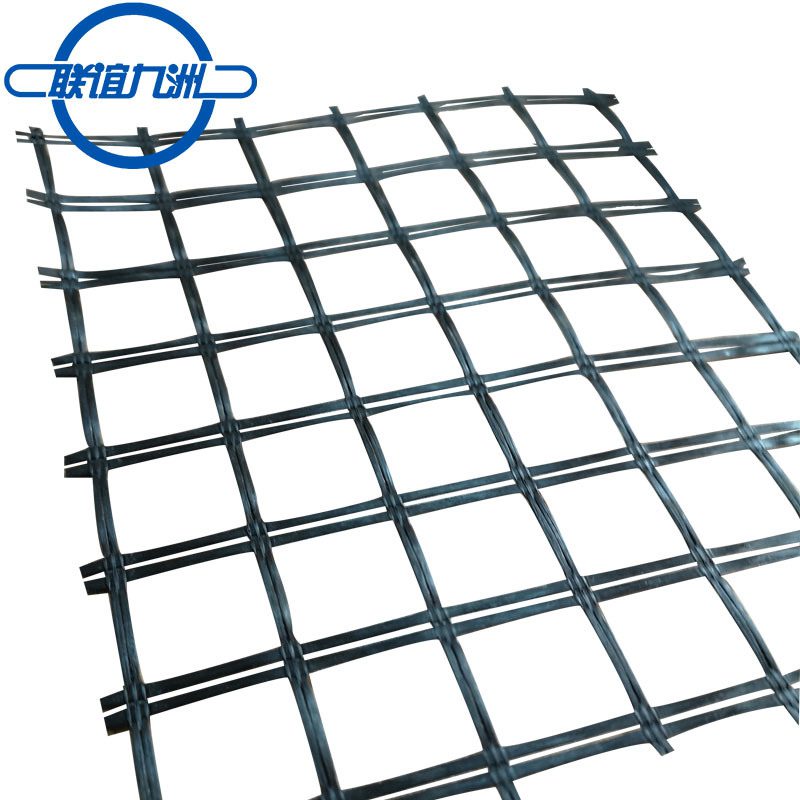
Lianyi® Asphalt Reinforcement Fiberglass Geogrid,whose full name is fiberglass geogrid.It is a flat mesh material made from alkali-free glass fiber yarn as raw material, which is woven into a grid-like base material through precise warp knitting technology, and then coated with a special modified asphalt coating or polymer coating on its surface.
Its core working principle is “a combination of hardness and flexibility” .
Glass fiber offers extremely high tensile strength and very low elongation (that is, it is very “rigid” and hardly deforms).
The asphalt coating ensures a perfect bond (” compatibility “) with asphalt concrete and provides short-term protection.
The grid structure enables the hot-laid asphalt concrete aggregates to pass through it, forming a three-dimensional mechanical interlock.
After being laid in the asphalt layer, it mainly bears tensile stress, acting like a “skeleton” to disperse stress and inhibit the opening and expansion of cracks.
Features Of Asphalt Reinforcement Fiberglass Geogrid
*Extremely high tensile strength: Under the same weight, its strength is higher than that of steel, and it can provide strong support for the road surface.
*Low elongation (<3%): This is the key to its resistance to reflective cracks. It hardly elongates by itself and can firmly “hold” both sides of the crack, effectively limiting displacement and preventing the crack from developing upward.
*Excellent heat resistance: Glass fiber itself is non-flammable and can easily withstand the high temperature of asphalt concrete paving above 160°C without melting or losing strength.
*Good physical and chemical stability: corrosion-resistant, does not rust, does not mold, and has a long service life in road environments.
*Rigid mesh is relatively brittle: this is one of its “disadvantages”. During transportation and laying, it needs to be handled with care to avoid bending and impact from hard objects, which may cause fiber breakage.
Advantages Of Asphalt Reinforcement Fiberglass Geogrid
*Outstanding anti-reflective crack capability: This is the most core and irreplaceable advantage of fiberglass geogrid. Its characteristic of “high strength and low elongation” makes it the preferred material for preventing cracks and joints on old roads from reflecting onto newly laid asphalt layers.
*The best performance-to-price ratio: Among all geogrids, fiberglass geogrids are the most economical and effective solution for the main demand of crack resistance.
*Effectively delay fatigue cracking: By dispersing the stress under wheel load, the tensile strain at the bottom of the asphalt layer is reduced, thereby significantly extending the fatigue life of the pavement.
*The construction is relatively simple: it is usually in roll form, light in weight and fast in laying speed. There are two types: self-adhesive type (with adhesive layer on the back) and nail-fixed type, which can meet different construction requirements.
Applications Of Asphalt Reinforcement Fiberglass Geogrid
*Old road renovation and repaving project
“White to Black” : Lay fiberglass grating on the old cement concrete road surface and then add an asphalt surface layer. It can effectively absorb and disperse the stress at the joints and cracks of the old board, preventing reflective cracks.
Repair and reinforcement of old asphalt roads: Lay them on the old asphalt road surface that already has a large number of cracks, and then apply a overlay to prevent the rapid development of the original cracks.
*Anti-cracking layers for newly-built roads
Semi-rigid base anti-cracking: Laid between semi-rigid bases such as cement-stabilized crushed stone and the asphalt underlayer. Semi-rigid base layers are prone to dry shrinkage and temperature shrinkage cracks under changes in temperature and humidity. Fiberglass geogrids can “shield” these cracks and prevent them from reflecting onto the asphalt surface layer.
*Stress-absorbing layers in road structures
It is used between layers of asphalt as a stress-absorbing intermediate layer to enhance the overall crack resistance of the pavement.
*Reinforcement of soft soil subgrade
Although it is not as strong as steel-plastic composite geogrid, it can be used in some medium-requirement soft foundation treatments to enhance the integrity and uniform load-bearing capacity of the roadbed and reduce pavement cracking caused by uneven settlement.

Keywords:
1. Geogrid
What’s PP Plastic Geogrid?
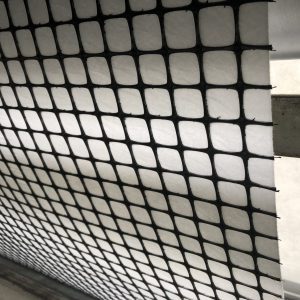
Lianyi®PP Plastic Geogrid is a kind of mesh or grid-shaped engineering material made from high-molecular polymers (such as polypropylene, polyethylene, etc.) through extrusion, stretching, welding and other processes.PP plastic geogrids are a revolutionary reinforcing material in modern geotechnical engineering. Through its unique mechanical structure and the synergistic effect with soil,pp plastic geogrid has economically and effectively solved traditional problems such as subgrade settlement, slope instability and pavement cracking with its outstanding advantages of lightweight, high strength, corrosion resistance and convenient construction. PP Plaastic Geogrid has become an indispensable basic material in fields such as highways, railways, water conservancy and environmental protection.
Features Of PP Plastic Geogrid
*High strength and low elongation
Through unidirectional or bidirectional stretching processes, the polymer molecules are arranged in a directional manner, endowing them with extremely high tensile strength (typically 10-50 kN/m or higher) and very low elongation (generally less than 13%), which can effectively restrain soil deformation.
*Excellent interlocking effect with soil
The unique grid structure provides an ideal interlocking and interlocking interface for soil and rock materials, effectively diffusing vertical loads horizontally, restricting the lateral displacement of soil, and forming a stable reinforced complex.
*Durability and corrosion resistance
It is fully resistant to chemical substances, microorganisms and electrolytic corrosion in the soil, with a service life far exceeding that of metal materials. The design life is usually 50 to 120 years, and it requires no maintenance.
*Permeability and integrity
The open-cell mesh structure (with pore diameters much larger than those of geotextile) does not impede water flow and ensures smooth drainage. Meanwhile, it has good integrity and uniform force distribution.
Advantages Of PP Plastic Geogrid
*Significantly enhance engineering performance
(1)Enhance bearing capacity: Distribute loads and reduce uneven settlement.
(2)Enhance stability: Prevent slope collapse and retaining wall bulging.
(3)Control cracks: Delay reflective cracks on the road surface.
*Significantly reduce costs and construction time
(1)Material saving: It can reduce the thickness of the filler and make use of local inferior soil.
(2)Simplified construction: Quick laying, no need for large equipment, and less affected by weather.
(3)Reduce long-term maintenance costs: Almost no maintenance required.
*Safety and Environmental Protection
Light in weight and safe for construction. As a reinforcing material, it can be used to build steeper and more ecological slopes, which is conducive to greening.
Applications Of PP Plastic Geogrid
*Subgrade and pavement base: Disperse vehicle loads, prevent base gravel from penetrating soft soil, and reduce reflective cracks.
*Railway ballast cushion: Stabilizes ballast and prevents subgrade heaving.
*Large storage tanks and parking lot foundations: Provide uniform planar constraints.
*Ecological slope protection project: Combined with three-dimensional vegetation nets and plant bags, it realizes the integration of “reinforcement and greening”.
*River regulation and coastal protection: Reinforcing embankments and preventing soil erosion.
*Prevention and control of abutment jumping: Reinforce the roadbed at the bridgehead to alleviate the differential settlement at the connection between the abutment and the roadbed.

Keywords:
1.Geogrid
What Are Geogrids?
Lianyi®Geogrids are geosynthetic materials used to reinforce weak, soft soils and similar materials. They are typically made from polymers such as polyester (PET), polypropylene (PP), or high-density polyethylene (HDPE) and are characterized by their grid-like structure.This structure provides high tensile strength and effective soil stabilization and geogrid interlock in granular soils, making geogrids a vital component in various civil engineering applications.There are three main types of geogrids: uniaxial geogrids , biaxial geogrids, and triaxial geogrids.
At Lianyi Company, we provide many types of geogrids available: uniaxial for one-directional strength, and biaxial for equal, bi-directional strength distribution.
*Uniaxial Geogrids
Ideal for reinforcing retaining walls and embankments, these geogrids are designed to withstand stress in one direction, providing high tensile strength along their length, intercepting potential failure slip planes.
*Biaxial Geogrids
Offering equal strength in both directions, biaxial geogrids are perfect for applications like road construction, working platforms and soft ground stabilization, ensuring uniform load distribution.
*Triaxial Geogrids
Offering exceptional reinforcement capabilities in all directions, triaxial geogrids are ideal for applications demanding maximum soil stability, such as slopes, embankments, and foundations..
Benefits of Using Geogrids for Sub-base Reinforcement
*Increased Load-Bearing Capacity: Geogrids enhance the load-bearing capacity of soils, making them ideal for supporting heavy loads.
*Soil Stabilization: They help in stabilizing weak, soft soils, reducing ground movement.Usually combined with a nonwoven geotextile for greater design effectiveness.
*Cost-Effective:By reducing the sub-base thickness of expensive imported granular fill materials, geogrids can reduce overall project costs.
*Durability: Made from synthetic polymers, geogrids are resistant to most chemicals found in the ground that cause environmental degradation.They are also inert to biological degradation and have long service lives, longer than the superstructures that they support.
*Environmental Benefits: Geogrids reduce the need for excavation and additional heavy earthmoving and transportation of imported fill materials, making them an eco-friendly choice by reducing the overall carbon footprint.
General Applications of Geogrids By understanding the types,benefits, and applications of geogrids,engineers and construction professionals can better implement these materials to improve project outcomes and infrastructure longevity. We offer a variety of geogrids to suit your specific needs.

Keyword:
1. Geogrid
2. PP Geogrid
What’s Steel Plastic Composite Geogrid?
Lianyi®Steel-plastic composite geogrid is a geosynthetic material made by wrapping high-strength steel wires with high-density polyethylene to form high-strength strips, which are arranged at right angles in the plane longitude and weft, and then welded by ultrasonic waves. According to the engineering requirements, the tensile force of the strips can be changed by using different mesh diameters and the number of steel wires. High-strength steel wires (or other fibers) are specially treated and combined with polyethylene (PE) or polypropylene (PP) And by adding other additives and through extrusion, it becomes a composite high-strength tensile strip. If the surface has a rough texture, it is a high-strength reinforced geotextile strip.From this single strip, it is woven or interlaced at certain intervals in the longitudinal and transverse directions, and the junction points are welded by a special reinforced bonding fusion welding technology to form a reinforced geogrid.
Features Of Steel Plastic Composite Geogrid
*High strength and small deformation
*Small creep
*Corrosion resistance and long service life: Steel-plastic composite geogrid are protected by plastic materials and supplemented with various additives to endow them with anti-aging and oxidation properties, enabling them to resist corrosion in harsh environments such as acids, alkalis, and salts. Therefore, steel-plastic composite geogrid can meet the usage requirements of various permanent projects for over 100 years, and they have excellent performance and good dimensional stability.
*Convenient and fast construction, short cycle and low cost: Steel-plastic composite geogrid is easy to lay, overlap and position, and are smooth, avoiding overlapping and crossing. This can effectively shorten the project cycle and save 10% to 50% of the project cost.
Applications Of Steel Plastic Composite Geogrid
*It features high strength, low creep, and adaptability to various soil environments, fully meeting the requirements for high retaining walls in high-grade highways.
*It can effectively enhance the interlocking and biting effect of the reinforced bearing surface, greatly increase the bearing capacity of the foundation, effectively restrain the lateral displacement of the soil, and improve the stability of the foundation.
*Compared with traditional geogrid, it features greater strength, stronger load-bearing capacity, corrosion resistance, anti-aging, large friction coefficient, uniform holes, convenient construction and long service life.
*It is more suitable for deep-sea operations and embankment reinforcement, fundamentally solving the technical problems such as low strength, poor corrosion resistance and short service life caused by long-term erosion by seawater when other materials are used to make gabions.
*It can effectively prevent construction damage caused by being crushed or damaged by machinery during the construction process.

Keyword:
1.Welded Geogrid