Call us today!

What’s Geogrid?
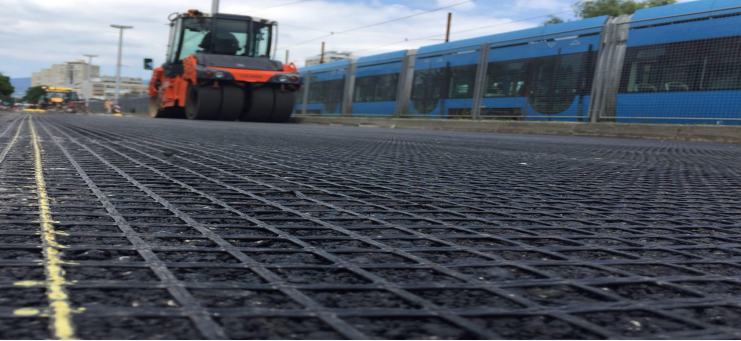
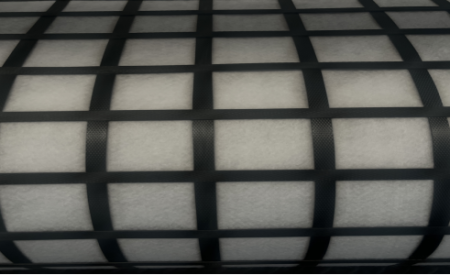
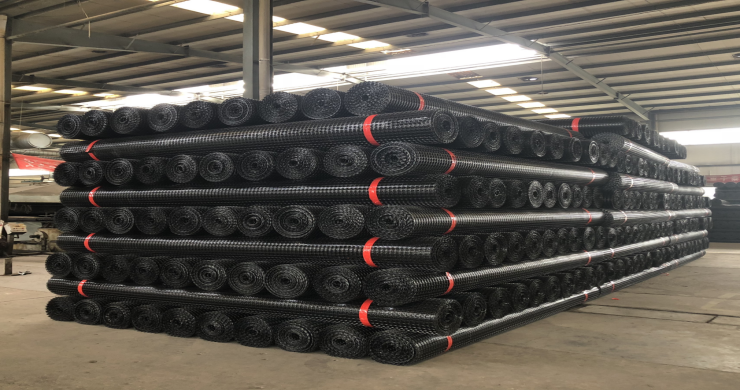
Lianyi®Geogrid is a major type of geosynthetic material.Compared with other geosynthetic materials, it has unique properties and functions.Commonly used as reinforcing materials for reinforced soil structures or composite materials, etc.Geogrids are classified into four major categories:pp geogrid,steel-plastic composite geogrid,pp/pet welded geogrid ,mining geogrid,basalt geogrid,glass fiber geogrid and warp knitted polyester geogrids. Geogrids are two-dimensional grid screens or three-dimensional grid screens with a certain height made of high-molecular polymers such as polypropylene and polyvinyl chloride through thermoplastic or molding processes. When used in civil engineering, they are called geogrid.
(1) PP geogrid
PP geogrids are polymer mesh materials with square or rectangular shapes formed by stretching.According to the different stretching directions during manufacturing, they can be classified into uniaxial stretching and biaxial stretching types. It involves punching holes in polymer sheets produced by extrusion (the raw materials are mostly polypropylene or high-density polyethylene),and then subjecting them to directional stretching under heating conditions.Uniaxial stretched grid is made by stretching only along the length of the plate, while biaxial stretched grid is made by further stretching the uniaxial stretched grid in a direction perpendicular to its length.
Due to the fact that during the manufacturing process of plastic geogrids,the high-molecular polymers of the polymer will be rearranged and oriented along with the heating and stretching process, the connection force between the molecular chains is strengthened, achieving the purpose of enhancing its strength.Its elongation is only 10% to 15% of that of the original sheet.If anti-aging materials such as carbon black are added to geogrid, they can have better durability properties such as acid resistance, alkali resistance, corrosion resistance and anti-aging.
Biaxial geogrids are made from high-molecular polymers through extrusion, plate forming, punching processes, and then stretched longitudinally and laterally.This material has great tensile strength both in the longitudinal and transverse directions. This structure can also provide an ideal interlocking system for more effective force bearing and diffusion in the soil, and is suitable for large-area permanent load-bearing foundations
Uniaxial geogrids are made by extruding high-molecular polymers into thin plates, punching regular hole nets, and then stretching them longitudinally.During this process, the polymer is made into a directional linear state and forms a long elliptical network structure with uniform distribution and high node strength.This structure features a rather high tensile strength and tensile modulus.Particularly, our company’s products of this type have an early tensile strength and tensile modulus that exceed international standards (with elongation ranging from 2% to 5%).It provides the soil with an ideal chain system for bearing and diffusing forces.This product has a high tensile strength (>150Mpa), is suitable for various soils, and is currently widely used as a reinforcing and strengthening material.
Triaxial Geogrid is made from a punched polypropylene sheet oriented in multiple, equilateral directions to form its triangular aperture, resulting in high radial stiffness throughout the full 360 degrees. PP Triaxial Geogrid is a kind of polypropylene bidirectional overall tensile geoglage, the mesh is triangular, each node has 6 ribs, the structure is stable, the force is uniform, and the performance is superior.
(2) Steel-plastic composite geogrid
Steel-plastic composite geogrids are made from high-strength steel wires (or other fibers) that have undergone special treatment, combined with polyethylene (PE) and other additives, and extruded to form composite high-strength tensile strips.If the surface has a rough texture, it is called a high-strength reinforced geogrid.From this single strip, it is woven or interlaced at certain intervals in the longitudinal and transverse directions, and the junction points are welded by a special reinforced bonding fusion welding technology to form a reinforced geogrid.
(3) PP welded geogrid
PP Welded Geogrid is made of polypropylene as the main material, adding anti-aging agents and other auxiliary agents, by extruding and stretching into a high strength fine rib with rough surface embossed, the rib is at right angles to the plane weft, and its intersection is welded by ultrasonic wave.PP Welded Geogrid is modern type of geosynthetic material used for soil reinforcement, ground stabilization, and various civil engineering applications.
(4) Glass fiber geogrid
Glass fiber geogrid is a kind of mesh structure material made of glass fiber through certain weaving techniques.To protect the glass fiber and improve the overall performance, it undergoes a special coating treatment process to form a geocomposite material.The main component of glass fiber is silicon oxide, which is an inorganic material.Its physical and chemical properties are extremely stable, and it features high strength, high modulus, excellent wear resistance, outstanding cold resistance, and no long-term creep.Good thermal stability;the reticular structure interlocks and restricts the aggregates.Enhance the load-bearing capacity of asphalt mixtures.Due to the special modified asphalt coating on the surface, it has dual composite performance, which greatly improves the wear resistance and shear capacity of the geogrid.
- Polyester geogrid
Polyester geogrids are made from high-strength polyester yarns as raw materials. It adopts a warp knitted directional structure. The warp and weft yarns in the fabric have no bending state with each other. The intersection points are bound and combined with high-strength fiber filaments to form a firm connection point, fully exerting its mechanical properties. The high-strength warp knitted polyester geogrid features high tensile strength, low elongation, large tear strength, and small difference in longitudinal and transverse strength. It is resistant to ultraviolet aging, wear and corrosion, lightweight, and has strong interlocking force with soil or crushed stones. It plays a significant role in enhancing the shear resistance of soil and reinforcing to improve the integrity and load-bearing capacity of soil.
(6)Mining Geogrid
Minining geogrid is a kind of plastic protective net used in underground coal mines. It is mainly made of polypropylene and processed by flame-retardant and anti-static technologies. It is formed into an integral structure of “double anti-” plastic geogrid by biaxial stretching. This product is easy to install, has a low cost, is safe and beautiful Mining geogrids are also known as biaxially oriented plastic grid false roofs for underground coal mines in coal mining operations, abbreviated as false roof nets. Mining geogrids are specially designed and manufactured for the false roof support of underground mining faces and the side support of roadways in coal mines. They are made by using several high-molecular polymers and adding other modifiers through processes such as heating, extrusion, molding, punching, stretching, shaping, and winding.Compared with metal textile nets and plastic woven nets,mining geogrid have the characteristics of light weight, high strength, isotropy, anti-static, non-corrosive and flame-retardant. They are a new type of mesh grid material for underground support projects in coal mines and civil engineering.
1. Geogrid
2. PP Geogrid
What’s Warp Knitted Polyester Geogrid?
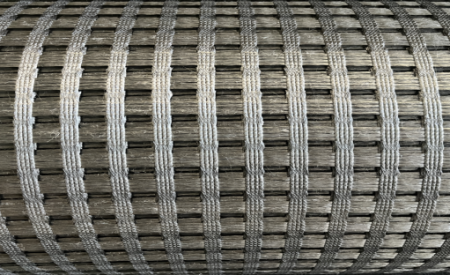
Lianyi®Warp knitted polyester geogrid is made from high-strength polyester industrial filaments, which are woven into grid fabric through warp knitting and then coated with PVC to form geogrid.Polyester geogrid is applied to the reinforcement and strengthening of soft soil foundation treatment and roadbed, embankment and other projects to improve project quality and reduce project cost.
Features Of Warp Knitted Polyester Geogrid
*High tensile strength,biaxial type from 15-15kN/m to 1000-1000kN/m,uniaxial type from 20-15kN/m to 1000-50kN/m
*Good elongation ≤13%
*Mesh size: 12*12mm,25*25mm,30*30mm,40*40mm,50*50mm,60*60mm
*Resistant to erosion and aging
*It has a strong biting force with the base material
*Light in weight and with drainage function
Advantages Of Warp Knitted Polyester Geogrid
*Polyester geogrid are durable,resistant to seismic and dynamic loads,reliable and cost-effective
*High resistance against earthquake forces,flexible integrity and aesthetic appearance
*Increase bearing capacity in all soil conditions
*Cost savings due to lower base material requirement
*Limit creep effect
*Easy and fast installation
Applications Of Warp Knitted Polyester Geogrid
*Woven polyester geogrid is used for reinforcing and strengthening soft soil subgrades of various roads such as highways, railways, and municipal roads. They can effectively enhance the strength of the subgrade and delay the reflective cracks of the road.
*Woven polyester geogrid is used in water conservancy projects for reinforcing and isolating DAMS and rivers, reinforcing soft soil foundations, enhancing their protective capabilities, and improving the bearing capacity and stability of the foundations.
*Woven polyester geogrids is used for reinforcing embankment slopes and retaining walls to enhance overall strength, as well as for reinforcing soft soil foundations in highways, railways, water conservancy and other fields.
*Woven polyester geogrid is used for railway ballast protection: Due to train vibrations and exposure to wind and rain, ballast may be lost. Geogrid is used to wrap the ballast to prevent its loss and enhance the stability of the roadbed.
*Woven polyester geogrid for railway retaining walls: Geogrid is used to reinforce the retaining walls along the railway, such as the usage platforms and freight platforms in railway stations, which can extend their service life and reduce maintenance costs.
*Woven polyester geogrid is used to reinforce retaining walls: Adding geogrid beside highways and on vertical retaining walls can enhance the load-bearing capacity of the retaining walls.
*The foundation of the abutment is usually prone to subsidence, causing the vehicle to bounce. Laying geogrid under the abutment foundation can enhance the bearing capacity and stabilize the abutment.
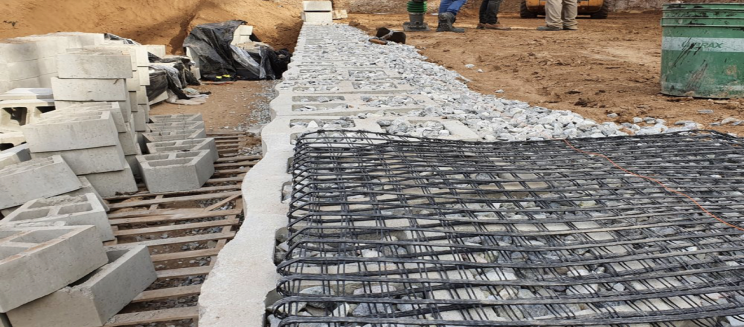
1. Geogrid
What’s Asphalt Composite Grid?
Lianyi®Asphalt Composite Grid is used for the reinforcement of asphalt overlays in the construction of new pavements and rehabilitation of existing pavements.
Asphalt Composite Grid is a composite consisting of bundles of glass filaments stitched onto a polypropylene paving fabric in both the longitudinal and transverse directions using polyester (PET) yarn.The glass fibres provide high tensile stiffness, and the polypropylene fabric provides a means of maintaining the required geometry of the composite, as well as a fixing layer during installation.Once installed and saturated with bitumen, the paving fabric then acts as a waterproofing layer and also as a stress absorbing membrane interface.
Asphalt Composite Grid is a composite interlayer comprising a punched and stretched polypropylene geogrid thermally bonded to a fabric backing.The fabric backing facilitates installation and provides a long-term sealing effect -once saturated with bitumen. Owing to the 3-dimensional geometry of the geogrid, the new asphalt layer is mechanically interlocked into the geogrid’s wide apertures, thus providing reinforcement, stress relief and sealing functions.
Asphalt Composite Grid is a large aperture or standard aperture composite, typically used at a lower structural level,under base course and binder course layers.
Asphalt Composite Grid is a composite interlayer comprising a grid of glass filament bundles stitch bonded to a non-woven fabric.The high modulus glass filaments provide high absorption of stress at low strains.After being saturated with bitumen the fabric performs a sealing function.Asphalt Composite Grid provides reinforcement, stress relief and sealing functions.
Asphalt Composite Grid is a composite interlayer comprising a glass yarn grid stitch bonded to a lightweight backing fabric. The high modulus glass filaments provide high absorption of stress at low strains. The lightweight backing fabric is only present to assist with adhesion during installation and subsequently permits intimate contact between overlying asphalt and the underlying surface.
Asphalt Composite Grid consists of a glass yarn grid combined with a polymer modified bitumen membrane.The underside of the Asphalt Composite Grid includes an adhesive coating, while the upper side is treated with a protective layer of quartz sand.The adhesive layer is protected during storage by a peel-off release film.
Asphalt Composite Grid consists of a polymer modified bitumen membrane that is treated on the surface with a quartz sand, and the underside is coated to protect the product for storage and handling.
Asphalt Composite Grid does not require specialist installation and can be affixed to most sound substrates using the adhesive coating on the Asphalt Composite Grid product, or alternatively can be installed by heat activating the Asphalt Composite Grid product using a flame torch.
Features Of Asphalt Composite Grid
*High tensile strength and low elongation
.
*Minimum viscous elongation in order to assure long term reductions in the incremental plastic deformation of the asphalt layer
*High flexibility and drapability
*Easy to fix to the support layer with a tack coat spray and good adhesion to the support
*The connection between the upper and lower asphalt layers is assured by the tack coat, without creating any separation
Advantages Of Asphalt Composite Grid
*Increase road service life and save cost
*Prevent fatigue cracking and reflection cracking
*High-temperature resistant rutting
*Reduced rutting
*Initial and long-term cost savings compared with traditional rehabilitation methods
*The optimal interlayer type for the solution due to our diverse range of interlayer products
Applications Of Asphalt Composite Grid
*Reinforced asphalt overlay
*Asphalt pavement reinforcement
*Asphalt road construction
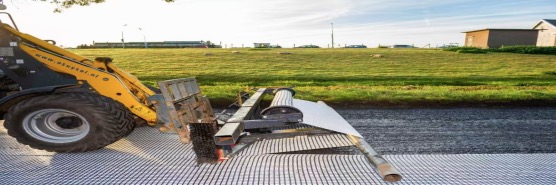
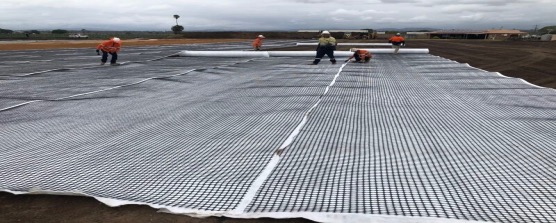
Lianyi®PP Composite Geogrid is made up of biaxial geogrid-Polypropylene through the process of extruding, longitudinal and transverse heat stretching.Nonwoven Geotextile is then heat bonded to the grid to form a sound composite structure.PP Composite Geogrid is designed to prevent reflection cracking, water damage and improve load capacity in road construction and renovation.
PP Composite Geogrid has the property of high temperature resistance and anti-fatigue cracking and therefore extending the life and time of asphalt pavements.
Features Of PP Composite Geogrid
*High tensile strength from 15-15kN/m to 50-50kN/m
*Good elongation ≤13%
*Mesh size: 33*33mm,36*36mm,39*39mm,65*65mm
*High strength junctions and stiff ribs
*Good integrity,high node strength
*Stable performance,strong resistance to microorganisms and corrosion
Advantages Of PP Composite Geogrid
*Distribution of loads and therefore reducing stress concentration over the soil
*The geogrid’s structural junctions, rigid ribs and thick walls help lock aggregate, increasing its shear resistance.
*As a result when a vertical load is applied, the aggregate is restrained by the ribs reducing deformation
*Decrease in long term deformation
*Increase in load distribution
Applications Of PP Composite Geogrid
*Base reinforcement
*Subgrade reinforcement
*Pavement stabilisation
*Subgrade separation
*Embankment stabilisation
*Slope stabilisation
1. Geocomposite
2. Combigrid
What’s Asphalt Fiberglass Grid?
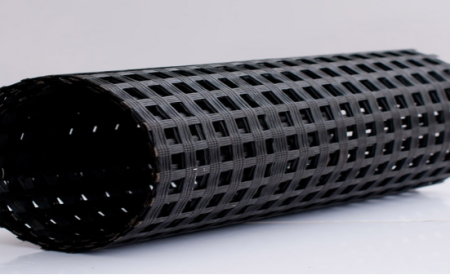
Lianyi®Asphalt Fiberglass Grid is an excellent geosynthetic material used for road surface reinforcement, old road strengthening, and roadbed and soft soil foundation reinforcement.Asphalt Fiberglass geogrid
is a semi-rigid product made of high-strength alkali-free glass fiber yarns through an internationally advanced warp knitting process to form a mesh base material, which is then coated on the surface. It features extremely high tensile strength in both the warp and weft directions and a relatively low elongation rate.Fiberglass geogrid also possesses excellent properties such as heat resistance, cold resistance, anti-aging, and corrosion resistance.Asphalt fiberglass grid is widely used in the reinforcement of asphalt pavements, cement pavements, and roadbeds, as well as in railway roadbeds, embankment slope protection, airport runways, and sand prevention and control projects.
Asphalt fiberglass grid is a kind of mesh structure material made of glass fiber yarns through certain weaving techniques. To protect the glass fiber yarns and improve the overall performance, it undergoes a special coating treatment process to form a geocomposite material.
Asphalt fiberglass grid is made by weaving and coating glass fiber filaments. Asphalt fiberglass grid feature extremely high tensile strength in both longitudinal and transverse directions, low elongation, high elastic modulus, and excellent resistance to high and low temperatures. After surface coating treatment, they possess superior alkali resistance and aging resistance, and are widely used in the reinforcement of asphalt pavements, cement concrete pavements, and roadbeds. It is applicable to both hard and flexible road surfaces. Compared with traditional road surfaces, it can reduce costs, extend service life and prevent reflective cracks on the road. Asphalt fiberglass grid can also be used for reinforcing soft soil in railways, airports, water conservancy projects, DAMS, etc., as well as for reinforcing road bases.
Features Of Asphalt Fiberglass Grid
*The main component of glass fiber is silicon oxide, which is an inorganic material. Its physical and chemical properties are extremely stable, and it features high strength, high modulus, excellent wear resistance, outstanding cold resistance, and no long-term creep. Good thermal stability; The reticular structure interlocks and restricts the aggregates. Enhance the load-bearing capacity of asphalt mixtures. Due to the special modified asphalt coating on the surface, it has dual composite performance, which greatly improves the wear resistance and shear capacity of the fiberglass geogrid .
.
*The product features high strength, low elongation, high temperature resistance, high modulus, light weight, good toughness, corrosion resistance and long service life. It can enhance and strengthen the road surface, prevent rutting and fatigue cracking of the road surface It can resist thermal and cold expansion cracks and reflective cracks beneath, and disperse the load-bearing stress of the road surface, thereby extending the service life of the road surface. It has high tensile strength and low elongation, no long-term creep, good physical and chemical stability, good thermal stability, resistance to fatigue cracking, high-temperature rutting, low-temperature shrinkage cracking, and can delay and reduce reflective cracks.
*Sometimes, in combination with self-adhesive pressure-sensitive adhesive and surface asphalt impregnation treatment, the grid and the asphalt pavement are closely integrated into one. Due to the increased interlocking force of soil and stone materials within the fiberglass geogrid, the friction coefficient between them significantly increases (up to 0.8 to 10). The uplift resistance of the fiberglass geogrid buried in the soil is significantly enhanced due to the strong frictional biting force between the fiberglass geogrid and the soil. Therefore, it is an excellent reinforcing material. Meanwhile, fiberglass geogrid are a kind of lightweight and flexible plastic flat mesh material. They are easy to cut and connect on site and can also be overlapped and lapped. The construction is simple and does not require special construction machinery or professional technicians.
Advantages Of Asphalt Fiberglass Grid
*Slow down reflective cracks
Reflective cracks are caused by significant displacement of the old concrete surface layer near the joints or cracks, resulting in stress concentration within the asphalt overlay above it. They include horizontal displacement due to changes in temperature and humidity, as well as vertical shear displacement caused by traffic loads. The former leads to a relatively concentrated tensile stress within the asphalt overlay above the joint or crack. The latter subjects the asphalt overlay above the joint to greater flexural tensile stress and shear stress.
Due to the high modulus of fiberglass geogrid, reaching 67Gpa, they are applied as hard interlayers with high rigidity in asphalt overlay layers. Their function is to suppress stress, release strain, and at the same time, as reinforcing materials for asphalt concrete, enhance the tensile and shear strength of the overlay structure, thereby achieving the purpose of reducing cracks. Practical experience shows that the corresponding crack energy of a horizontal crack that has changed direction can move 0.6 meters from its starting point. Reinforcing materials with a width of more than 1.5 meters help ensure that the energy is completely dissipated on both sides of the crack.
*Resistance to fatigue cracking
The asphalt overlay on the old cement concrete pavement mainly serves to enhance the pavement’s functionality and makes little contribution to its load-bearing capacity. The rigid concrete pavement beneath the overlay still plays a crucial role in load-bearing. However, the asphalt overlay on the old asphalt concrete pavement is different. The asphalt overlay will bear the load together with the old asphalt concrete pavement. Therefore, when asphalt overlay is applied to asphalt concrete pavement, in addition to reflective cracks, fatigue cracking will also occur due to the long-term action of loads. We conducted a force analysis on the loading conditions of the asphalt overlay on the old asphalt concrete pavement: As the asphalt overlay is a flexible surface layer of the same nature as the asphalt overlay, the road surface will bend and sink when subjected to loads. The asphalt overlay layer in direct contact with the wheel is subjected to pressure, while the surface layer is subjected to tensile force outside the wheel load edge. Due to the different nature of the forces acting on the two force-bearing areas and their close proximity to each other, damage is prone to occur at the junction of the two force-bearing areas, that is, at the sudden change of force. Fatigue cracking occurs under the action of long-term loads.
In the asphalt overlay layer, fiberglass geogrid can disperse the above-mentioned compressive and tensile stresses, forming a buffer zone between the two stressed areas. Here, the stress changes gradually rather than suddenly, reducing the damage to the asphalt overlay layer caused by sudden stress changes. Meanwhile, the low elongation of the fiberglass geogrid
reduces the deflection of the road surface, ensuring that the road surface will not undergo excessive deformation.
*High-temperature resistant rutting
Asphalt concrete exhibits rheological properties at high temperatures, which are specifically manifested as: the surface layer of asphalt roads becomes soft and sticky in summer. Under the action of vehicle loads, depressions occur in the stressed area. After the vehicle loads are removed, the asphalt surface layer cannot fully recover to its pre-load condition, that is, plastic deformation occurs. Under the repeated rolling of vehicles, plastic deformation accumulates continuously, forming ruts. After analyzing the structure of the asphalt surface layer, it can be known that due to the rheological properties of asphalt concrete at high temperatures, and when subjected to loads, there is no mechanism in the surface layer that can restrict the movement of aggregates in the asphalt concrete, the asphalt surface layer is pushed, which is the main reason for the formation of ruts.
The use of fiberglass geogrid in the asphalt overlay layer serves as a framework in the asphalt surface layer. In asphalt concrete, aggregates run through the fiberglass geogrid, forming a composite mechanical interlocking system that restricts the movement of aggregates and increases the lateral restraint force in the asphalt overlay layer. The various parts of the asphalt surface layer check and balance each other, preventing the displacement of the asphalt surface layer and thus playing a role in resisting rutting.
*Resistant to low-temperature shrinkage cracking
In extremely cold regions, the surface temperature of asphalt roads in winter is close to the ambient temperature. Under such temperature conditions, asphalt concrete shrinks when cooled, generating tensile stress. When the tensile stress exceeds the tensile strength of asphalt concrete, cracks occur. Cracks develop in areas where they are concentrated, leading to diseases. From the perspective of the causes of cracks, the key to solving the problem lies in how to make the strength of asphalt concrete resist tensile stress.
The application of fiberglass geogrid in asphalt overlay layers significantly enhances the tensile strength of asphalt concrete, enabling it to withstand considerable tensile stress without failure. In addition, even if cracks occur in a local area, causing the stress at the crack site to be overly concentrated, the stress will gradually disappear through the transmission of the fiberglass geogrid, and the cracks will no longer develop into cracks. When selecting fiberglass geogrid, in addition to their performance indicators meeting the requirements of the above table, special attention should also be paid to ensuring that their width is not less than 1.5m, so as to have sufficient cross-sectional area when they are used as interlayers to control reflective cracks to fully dissipate crack energy. Meanwhile, the mesh size should be 0.5 to 1.0 times the maximum particle size of the asphalt surface layer material on it. This is conducive to achieving the best shear adhesive property and promoting the interlocking and confining of aggregates.
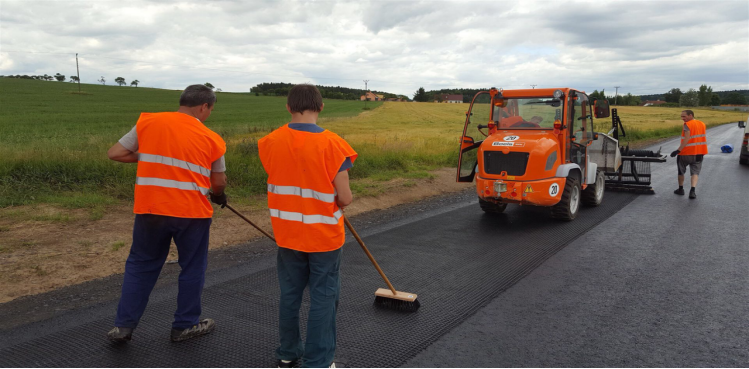
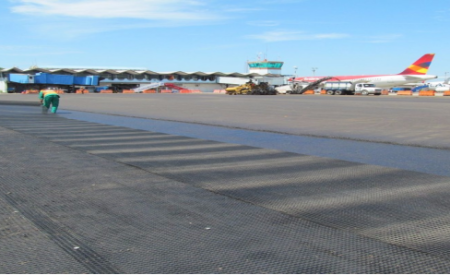
Lianyi®Asphalt Grid is a kind of mesh structure material made of glass fiber through certain weaving techniques. To protect the glass fiber yarns and improve the overall performance, it undergoes a special coating treatment process to form a geocomposite material.
Asphalt Grid is a new type of excellent geosynthetic base material for reinforcing road surfaces and roadbeds. This product is made by weaving and coating glass fiber filaments yarns.Asphalt Grid feature extremely high tensile strength in both longitudinal and transverse directions, low elongation, high elastic modulus, and excellent resistance to high and low temperatures. After surface coating treatment, they possess superior alkali resistance and aging resistance, and are widely used in the reinforcement of asphalt pavements, cement concrete pavements, and roadbeds. It is applicable to both hard and flexible road surfaces.Compared with traditional road surfaces, it can reduce costs, extend service life and prevent reflective cracks on the road. Asphalt Grid can also be used for reinforcing soft soil in railways, airports, water conservancy projects, DAMS, etc., as well as for reinforcing road bases.
*High tensile strength and low elongation – Asphalt Grid are made of glass fiber yarns and have a very high resistance to deformation, with a fracture elongation of less than 3%.
*No long-term creep – As a reinforcing material, the ability to resist deformation under long-term loads, that is, creep resistance, is extremely important. Asphalt Grid do not creep, which ensures that the product can maintain its performance for a long time.
*Thermal stability – The melting point of glass fiber yarns is above 1000℃, which ensures the thermal stability of the Asphalt Grid during the paving operation.
*Compatibility with asphalt mixture – The material coated on the Asphalt Grid in the post-treatment process is designed for asphalt mixture. Each fiber is fully coated, which has a high compatibility with asphalt. This ensures that the Asphalt Grid will not be isolated from the asphalt mixture in the asphalt layer but will be firmly combined together.
*Physical and chemical stability – After being coated with special post-treatment agents, Asphalt Grid can resist various physical wear and chemical erosion, as well as biological erosion and climate change, ensuring that their performance remains unaffected.
*Aggregate interlocking and confinement – As the Asphalt Grid is a mesh structure, the aggregates in the asphalt concrete can pass through it, thus forming mechanical interlocking.This restriction hinders the movement of aggregates, enabling the asphalt mixture to achieve a better compaction state, higher load-bearing capacity, better load transfer performance and less deformation under load.
*Reduced reflective and fatigue cracking
*Reduced rutting
*Extended pavement structural life
*Initial and long-term cost savings compared with traditional rehabilitation methods
*The optimal interlayer type for the solution due to our diverse range of interlayer products
*Large network of specialist installers and distributors
*Asphalt overlay reinforcement.
*Embankment slope protection
*Municipal roads, railway and highways.
*Airport runway
*Cement pavement