Call us today!

Getting geotextile installation right matters more than most people realize. The fabric itself is only part of the equation. How it goes down, what’s underneath it, and how the seams come together—these details determine whether a project holds up for decades or starts failing within a few years. What follows covers the practical side of deployment, from ground prep through final inspection, based on what actually works in the field.
Site Preparation That Actually Supports Long Term Performance
The ground beneath a geotextile does most of the heavy lifting. Skip the prep work, and even premium fabric won’t save the project.
Start with understanding what you’re working with. Soil type, moisture levels, and any contamination issues all feed into how the installation should proceed. Geotechnical surveys aren’t optional—they’re the foundation of every design decision. Unstable subgrades often need stabilization before any fabric touches the ground. Bearing capacity tests and percolation tests give you the numbers you need to make informed choices.
Surface preparation means clearing everything that could puncture or stress the fabric. Vegetation, rocks, debris—all of it goes. The subgrade gets graded to spec and compacted to target density. Soft spots get excavated and replaced with approved fill. Proper compaction prevents the differential settlement that causes so many problems down the line.
Drainage deserves serious attention. Water pooling beneath geotextile weakens the subgrade and accelerates failure. A granular drainage layer often makes sense, particularly where water tables run high or rainfall is significant. That layer keeps water moving and maintains structural integrity.
A practical checklist for site prep:
- Site Assessment: Geotechnical surveys covering soil classification and moisture analysis
- Clearing and Grubbing: Remove organic matter, rocks, and debris completely
- Subgrade Shaping: Grade to design specifications with proper drainage slopes
- Compaction: Hit required density using appropriate methods
- Ground Stabilization: Soil mixing or chemical stabilization where conditions demand it
- Drainage System: Underdrains or granular layers as site conditions require
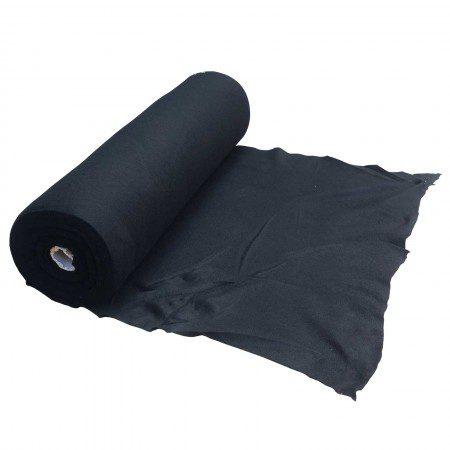
Matching Geotextile Fabric to What the Project Actually Needs
Material selection drives performance. The wrong fabric for the application creates problems that no amount of careful installation can fix.
Three main categories cover most applications: woven, non-woven, and composite. Each brings different strengths to different situations.
Woven Geotextiles are manufactured by weaving synthetic yarns into a stable, high-strength structure. High tensile strength and low elongation make them the go-to choice for reinforcement and separation work. Road construction over soft subgrades is a classic application. Various woven options exist for demanding structural support requirements.
Non-Woven Geotextiles come from bonding fibers through mechanical, thermal, or chemical processes. Their permeable structure handles filtration and drainage exceptionally well—water passes through while soil particles stay put. Drainage systems, erosion control, and geomembrane protection all benefit from non-woven products. Multiple nonwoven options address diverse filtration and protection needs.
Geocomposite Geotextiles combine two or more geosynthetic components. A geotextile paired with a geogrid or geomembrane can handle multiple functions simultaneously. A drainage core sandwiched between geotextile filters on both sides provides drainage and filtration in one product.
| Application | Recommended Geotextile Type | Key Properties |
|---|---|---|
| Road Base Separation | Woven, Non-Woven | High tensile strength, puncture resistance |
| Drainage Systems | Non-Woven | High permeability, filtration efficiency |
| Erosion Control | Non-Woven, Woven | UV resistance, soil retention |
| Soil Reinforcement | Woven | High modulus, low creep |
| Geomembrane Protection | Non-Woven | Puncture resistance, cushioning |
For filtration applications, apparent opening size (AOS) and permittivity matter most. Separation work prioritizes tensile strength and puncture resistance. Technical teams can assist with selection to ensure the fabric matches project requirements and budget constraints.
Installation Techniques That Hold Up Over Time
How the fabric goes down determines how long it performs. Proper laying, seaming, and anchoring prevent the failures that show up months or years later.
Inspect rolls before deployment. Transport and storage can cause damage that compromises performance. Cut out and replace any damaged sections. The subgrade should be smooth, firm, and clear of anything sharp. Unroll fabric directly onto the prepared surface, keeping it taut and wrinkle-free.
Overlap requirements vary based on geotextile type, subgrade conditions, and intended function. Softer subgrades and separation applications generally need more overlap. Getting this wrong creates weak points in the system.
Seaming methods depend on project specs and material type. Thermal bonding produces strong, continuous seams. Sewing offers flexibility across applications. Simple overlaps secured with pins work for temporary installations or less critical situations.
Anchoring prevents displacement during construction and from environmental forces. Trenching and backfilling edges, anchor pins, or aggregate placement directly over fabric—the right method depends on site conditions and expected forces.
Protect exposed fabric from heavy equipment. Place a minimum cover layer of aggregate or soil as soon as installation allows. This guards against UV degradation and mechanical damage.
| Geotextile Type | Overlap Requirement (Minimum) | Notes |
|---|---|---|
| Woven | 300 mm (12 inches) | Increase for soft subgrades or high-stress areas |
| Non-Woven | 450 mm (18 inches) | Maintains filtration and drainage continuity |
| Geocomposite | 600 mm (24 inches) | Follow manufacturer’s specific guidelines for multi-layer products |
Quality Control and What Happens After Installation
The work doesn’t end when the last roll goes down. Systematic inspection, prompt repairs, and ongoing attention keep installations performing as designed.
Visual inspection immediately after installation catches tears, punctures, and improper overlaps. Repair damaged areas with patches of the same material, extending well beyond the damaged zone. Cutting corners on repairs undermines the entire system.
Post-installation protection means getting cover material in place quickly. Soil or aggregate shields the fabric from UV exposure and construction traffic. Equipment operators need to understand what’s beneath them and work accordingly.
Ongoing maintenance involves watching for signs of trouble. Erosion, settlement, or drainage problems can indicate geotextile distress. Catching issues early prevents small problems from becoming expensive failures. Clogged drainage systems sometimes require excavation and cleaning.
Documentation matters for quality assurance. Material certifications, installation logs, and inspection reports create a project history that proves valuable for future maintenance or modifications.
| Issue | Potential Cause | Recommended Solution |
|---|---|---|
| Tears/Punctures | Sharp objects, improper equipment handling | Patch with geotextile extending 300mm beyond damage |
| Wrinkles/Folds | Insufficient tension during laying, uneven subgrade | Re-lay section, ensure smooth subgrade |
| Inadequate Overlap | Installation error | Add supplementary geotextile strip, secure properly |
| Subgrade Contamination (post-install) | Inadequate initial preparation, external ingress | Excavate and replace contaminated material, re-install |
| Drainage Clogging | Fine soil migration, biological growth | Hydro-jetting, or excavation and replacement of filter |
Working Through Difficult Site Conditions
Real projects rarely offer ideal conditions. Wet ground, steep slopes, rocky terrain, and contaminated soil all require adapted approaches.
Wet conditions demand careful equipment selection. Low ground pressure minimizes rutting and subgrade disturbance. Working in smaller sections and covering fabric immediately with aggregate protects against saturation and displacement.
Steep slopes need specialized anchoring. Trenches at the crest and toe, intermediate pinning, and high-strength woven fabric for reinforcement all play roles. Geocells or erosion control blankets combined with geotextiles provide enhanced stability where conditions warrant.
Rocky terrain calls for robust protection. Thicker, puncture-resistant non-woven fabric serves as a cushioning layer. Removing sharp rocks and adding a sand cushion during subgrade prep reduces puncture risk.
Contaminated soil projects may require chemically resistant geotextiles. Installation procedures must protect workers and prevent contaminant spread. Protective liners or geomembranes often work alongside geotextiles in these situations.
High winds complicate fabric laying. Ballasting with sandbags or temporary pinning prevents uplift. Scheduling work during calm periods improves efficiency and safety when weather allows.
Partner with Lianyi® for Geosynthetic Excellence
As a world-class leader in geosynthetics, Feicheng Lianyi Engineering Plastics Co.,Ltd. provides not just superior products like geogrids, geotextiles, and geomembranes, but also unparalleled expertise and comprehensive one-stop solutions. Partner with Lianyi® for your next project to ensure optimal performance, durability, and compliance with the highest quality standards. Contact us today at [email protected] or +86 19153868161 for tailored geosynthetic solutions and expert guidance on your specific geotextile installation needs.
Frequently Asked Questions About Geotextile Installation
What are the common mistakes to avoid during geotextile installation?
Improper overlap creates weak points that lead to premature failure. Damaged fabric from inadequate handling or sharp subgrade objects compromises protective function. Uneven surfaces or uncompacted soil prevents the geotextile from performing as designed. Wrong material for the application causes functional deficiencies that no installation technique can overcome. Poor anchoring allows shifting that undermines stability and performance.
How do different geotextile types impact installation methods?
Woven geotextile work focuses on achieving high tensile strength through careful tensioning to prevent wrinkles. Non-woven techniques emphasize maintaining continuous filtration and drainage, often requiring larger overlaps. Geocomposite deployment involves managing multiple layers with proper bonding and alignment. Filtration applications prioritize preventing soil intrusion while allowing water passage. Separation layer installation focuses on preventing material intermixing with robust overlaps.
What site conditions require specific geotextile preparation?
Soft or compressible soils need extensive ground stabilization and careful compaction before fabric placement. High water tables require dewatering and drainage solutions to prevent hydrostatic pressure buildup. Steep slopes demand specialized anchoring and erosion control measures against gravitational forces. Rocky terrain requires sharp object removal and potentially a protective sand layer to prevent puncture. Contaminated soil may require specialized handling and chemically resistant geotextiles.