Call us today!

Picking the right geotextile fabric matters more than most project managers realize until something goes wrong. I’ve seen drainage systems fail within two years because someone grabbed whatever was cheapest, and I’ve watched roads hold up beautifully for decades because the spec writer understood what they were dealing with. The difference usually comes down to matching fabric properties to actual site conditions rather than following generic recommendations.
Geotextile Fabric Fundamental Properties
High-performance geotextile fabric selection hinges on a thorough understanding of its fundamental properties. These characteristics dictate how a geotextile will perform under various environmental and mechanical stresses. Key geotextile material properties include tensile strength, which measures the fabric’s resistance to breaking under tension, and puncture resistance, indicating its ability to withstand localized damage. Geotextile permeability is vital for drainage and filtration applications, defining how easily water can pass through the fabric. Geotextile durability, encompassing resistance to UV degradation, chemical attack, and biological clogging, ensures long-term performance. Geotextile filtration characteristics, such as apparent opening size (AOS), determine the fabric’s effectiveness in retaining soil particles while allowing water flow. Each property plays a critical role in the overall functionality and success of the geotextile in its intended application.
Selection Criteria for Diverse Engineering Projects
Effective geotextile selection criteria involve a systematic evaluation of project-specific demands. Engineers must consider geotextile design considerations, including the intended function (e.g., separation, filtration, reinforcement), soil conditions, hydraulic gradients, and expected loads. Geotextile application suitability varies significantly; a project requiring soil stabilization beneath a road will demand different properties than one focused on erosion control. Analyzing geotextile project requirements thoroughly means accounting for factors like installation stresses and anticipated service life. Geotextile environmental factors, such as exposure to chemicals, UV radiation, or extreme temperatures, also heavily influence material choice.
What are the key properties to consider when selecting geotextile fabric?
When selecting geotextile fabric, several key properties demand close attention to ensure optimal performance. Geotextile tensile strength is critical for applications requiring reinforcement or load distribution, preventing material deformation. Geotextile puncture resistance measures the fabric’s ability to resist damage from sharp aggregates or site debris, crucial during installation and throughout its service life. The geotextile flow rate dictates how efficiently water passes through the fabric, directly impacting drainage and filtration effectiveness. Geotextile UV resistance is essential for any exposed application, preventing degradation from sunlight and maintaining long-term integrity.
| Property | Primary Function | Key Metric | Relevant Application Example |
|---|---|---|---|
| Tensile Strength | Reinforcement, Stabilization | kN/m | Road base reinforcement, retaining walls |
| Permeability | Drainage, Filtration | Flow Rate (L/min/m²) | Subsurface drainage, sediment control |
| Puncture Resistance | Protection | CBR Puncture (N) | Liner protection, aggregate separation |
| Apparent Opening Size (AOS) | Filtration | O95 (mm) | Preventing soil migration in drainage systems |
| UV Resistance | Durability | % Strength Retained | Exposed slopes, temporary erosion control |
Optimizing Geotextile Functionality Across Applications
Optimizing geotextile functionality requires matching the fabric type to the specific engineering challenge. In applications demanding geotextile filtration function, such as subsurface drainage systems, nonwoven geotextiles excel due to their high permeability and effective particle retention. When a geotextile separation layer is needed to prevent intermixing of dissimilar soil layers, both woven and nonwoven fabrics can be suitable, depending on the required strength and filtration characteristics. Geotextile erosion control often utilizes nonwoven fabrics for their ability to stabilize soil and allow vegetation growth, while geotextile drainage systems benefit from fabrics with high flow rates. For structural support, geotextile reinforcement applications, like those in retaining walls or road bases, frequently employ high-strength woven geotextiles or geogrids.
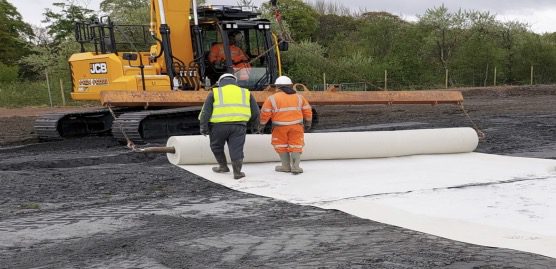
How does geotextile fabric prevent soil erosion and improve drainage?
Geotextile fabric prevents soil erosion by forming a protective barrier that stabilizes the soil surface against wind and water forces. It improves drainage by allowing water to pass through while retaining soil particles, preventing clogging of drainage systems. This dual function is crucial for maintaining the integrity of slopes, embankments, and other earthworks. A PP Non-Woven Geotextile can effectively filter water while preventing fine soil particles from migrating, thus preserving the drainage capacity of the system.
What is the difference between woven and nonwoven geotextiles for specific applications?
Woven geotextiles are manufactured by interlacing synthetic fibers, resulting in a fabric with high tensile strength and low elongation, making them ideal for reinforcement and separation applications where strength is paramount. Nonwoven geotextiles are produced by bonding fibers randomly, creating a fabric with excellent permeability, filtration, and cushioning properties, suitable for drainage, filtration, and protection. A PET Woven Geotextile might be used for heavy-duty road reinforcement, while a Polyester Spunbond Non-Woven Fabric would be chosen for a subsurface drainage project.
Quality Assurance and Industry Standards for Geotextiles
Ensuring the long-term success of any project necessitates rigorous geotextile quality control and adherence to established industry standards. Products that meet stringent specifications guarantee consistent performance. Geotextile industry standards, such as those set by ISO and ASTM, provide critical benchmarks for material properties and testing methods. Achieving geotextile certifications, including ISO 9001, confirms a manufacturer’s commitment to quality management systems. Products like Asphalt Fiberglass Geogrid are manufactured under strict ISO 9001:2015 guidelines. Comprehensive geotextile testing methods, encompassing tensile strength, permeability, and UV resistance, are essential to verify product specifications before deployment.
Innovations in Geotextile Technology and Future Trends
The field of geosynthetics is continuously evolving, with advanced geotextile materials pushing the boundaries of performance. Geotextile innovation focuses on developing products with enhanced durability, greater strength-to-weight ratios, and improved environmental resistance. Sustainable geotextiles, incorporating recycled content or biodegradable polymers, represent a significant future trend, aligning with global environmental objectives. Emerging geosynthetic product trends include multi-functional composites, like Combigrid, which combine reinforcement and separation capabilities, offering integrated solutions for complex engineering challenges.
Successful Geotextile Implementation Examples
Real-world applications powerfully demonstrate the impact of correctly selected geotextiles. Numerous geotextile project examples showcase how these materials enhance infrastructure resilience and longevity. In a major highway construction project, the strategic deployment of high-strength woven geotextiles as a separation layer prevented subgrade contamination and significantly extended pavement life. Another success story involved using nonwoven geotextiles in a challenging landfill capping project, where they provided effective filtration and protection for the geomembrane liner. These geotextile civil engineering applications underscore the importance of selecting the right material for specific needs.
Partner with Feicheng Lianyi for Superior Geosynthetic Solutions
Elevate your next civil engineering project with superior geosynthetics. As a world-class leader in innovative geotextile solutions, Feicheng Lianyi Engineering Plastics Co.,Ltd. offers unparalleled expertise and a comprehensive range of certified products designed for optimal performance and durability. Partner with us for a one-stop geosynthetics solution that meets the most demanding project specifications. Contact [email protected] or call +86 19153868161 to discuss your specific needs.
Frequently Asked Questions About Geotextile Fabric Selection
What factors influence the long-term performance of geotextile fabric in harsh environments?
The long-term performance of geotextile fabric in harsh environments is primarily influenced by its resistance to UV degradation, chemical attack, biological clogging, and mechanical damage. Selecting geotextiles with appropriate raw materials and stabilization additives is crucial. High-quality polypropylene or polyester geotextiles with excellent UV stabilizers are essential for exposed applications, while robust nonwoven geotextiles offer superior puncture resistance in aggressive soil conditions.
How do I choose the correct geotextile fabric for road construction and pavement reinforcement?
For road construction and pavement reinforcement, the selection of geotextile fabric depends on the specific function required. For separation and filtration beneath granular layers, a nonwoven geotextile with good permeability and puncture resistance is ideal. For reinforcement, a high-tensile strength woven geotextile or geogrid is often preferred to distribute loads and prevent reflective cracking. Key considerations include the subgrade soil type, traffic loads, and desired service life of the pavement structure.
What are the common mistakes to avoid when specifying geotextile fabric for a project?
Common mistakes when specifying geotextile fabric include underestimating environmental stresses, overlooking the importance of proper installation, and selecting a fabric based solely on cost rather than performance requirements. Avoid specifying a geotextile with insufficient filtration characteristics, inadequate tensile strength for reinforcement, or poor resistance to site-specific chemical conditions. Always refer to project-specific design criteria and accredited test data to ensure optimal geotextile selection.