Call us today!

What’s The Difference Of GeomembraneAnd Composite Geomembrane?
Lianyi®Geomembrane
*Definition: A single-material film that is basically impermeable to water, typically made of polymers such as high-density polyethylene (HDPE), polyvinyl chloride (PVC), and polyethylene (PE).
*Core functions: Anti-seepage and isolation. Its sole core task is to prevent the penetration of liquids or gases.
*Structure: It is a layer of plastic film, which can be smooth or rough (to increase the coefficient of friction).
Lianyi®Composite Geomembrane
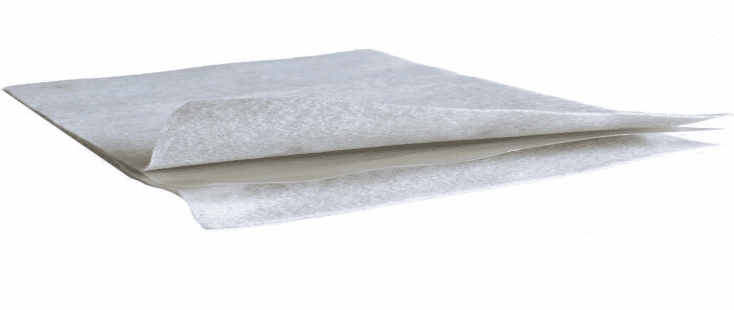
*Definition: An integrated material formed by combining geomembrane
and geotextile through methods such as hot pressing and adhesive bonding.
*Core functions: On the basis of anti-seepage, it has added the functions of drainage, exhaust, reinforcement and protection.
*Structure: It is usually a “sandwich” structure, such as “fabric-membrane-fabric” (two geotextile
and one geomembrane or “geottextile-geomembrane” (one geotextile and one geomembrane . The “membrane” in the middle is responsible for anti-seepage, while the “fabric” on the top and bottom or on one side is responsible for other functions.
| Characteristic | Geomembrane | Composite geomembrane |
| Material composition | Signle polymer film | Composite materials, including at least two layers: geomembrane and geotextile. |
| Core function | Single function: anti-seepage, isolation. | Composite functions: anti-seepage + protection, drainage, reinforcement, exhaust. |
| Mechanical properties | The tensile strength is average and it is easily punctured by sharp objects. It has relatively weak tear resistance. | The tensile strength, tear resistance, puncture resistance and puncture resistance have been significantly enhanced. Geotextiles play a role in stress dispersion and load sharing. |
| Friction characteristics | The surface of the glossy film is smooth, with a low friction coefficient with soil and sand, and it is easy to slide on slopes. The rough mask has improved. | The coefficient of friction is large. The rough fiber surface of the geotextile has good interlocking with soil and rock materials, which improves the stability of the interface. It is particularly suitable for slopes and steep slopes. |
| Construction and Protection | Extreme care must be taken during construction. A flat fine-grained material (such as a sand cushion layer) should be laid on the lower layer as a protective layer to prevent it from being punctured. | Geotextiles themselves are excellent protective layers. It can be directly laid on the base with lower requirements for flatness (such as slightly leveled soil base, or even crushed stone base), making the construction more convenient and having strong adaptability to the base |
| Drainage and exhaust | This function is not available. | The geotextile layer can drain the accumulated water or gas (such as groundwater, biogas) under the membrane, eliminate or reduce the pore water pressure under the membrane, and prevent the membrane from being “lifted” or damaged. |
| Cost | It is relatively low (with relatively simple materials and production processes). | Relatively high (with the addition of geotextile materials and composite processes). |
Geomembrane is like an ordinary plastic tarpaulin. It is waterproof, but it is easily punctured by branches and slippery when laid on muddy ground.
Composite geomembrane is like a reinforced tarpaulin with a non-woven fabric lining. The non-woven fabric surface increases strength and friction, allowing it to be directly laid on rough ground and also absorb some moisture. It has more comprehensive functions and is more durable.
Applications Of Geomembrane And Composite Geomembrane
*In situations where extremely high anti-seepage requirements are imposed, but the on-site conditions are good and the base layer is flat and smooth.
*Projects with limited budgets that can overcome their shortcomings through meticulous construction and the establishment of a good protective layer.
*For example: Anti-seepage linings for artificial lakes, landscape water bodies, and sewage treatment ponds (often laid on concrete or sand cushion layers).
Composite Geomembrane
*The engineering conditions are complex, with uneven base layers, crushed stones or tree roots.
*It needs to be laid on slopes, steep slopes or places with high stability requirements.
*Anti-seepage projects that require simultaneous consideration of drainage and exhaust issues.
*Projects that have high requirements for the material’s resistance to construction damage or those with tight schedules that need to simplify the base treatment.
*For example: landfill sites, tailings ponds, reservoir DAMS, roadbed engineering, channel anti-seepage, tunnel engineering, etc.Composite geomembranes are almost universally adopted in these projects.
Keyword:
1. Geomembrane
4. Geotextile