Call us today!

What’s Asphalt Reinforcement Geogrid?
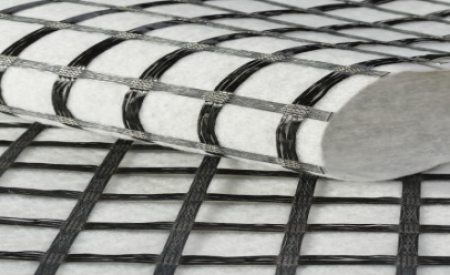
Lianyi®Asphalt Reinforcement Geogrid is high modulus glass fiber yarn associated with 17g/ m2 polyester or pp non woven geotextile,unique “warp knitting” technology ensures the immediate tension of the technical yarn,it provides 500g /m² emulsion excess (residual binder) to adapt to on-site conditions.
Features Of Asphalt Reinforcement Geogrid
*High tensile strength,from 30kN/m, to 300kN/m
*Low elongation,≤4%
*Mesh size from 12.7mm to 50mm
*Customized roll size,2*100m/roll,2.5*100m/roll,3.95*100m/roll,5*100m/roll,5.2*100m/roll
*Increasing asphalt tensile stress resistance
*Bearing a significant proportion of horizontal tension forces, thus ensuring even stress distribution over a large area
Advantages Of Asphalt Reinforcement Geogrid
*Asphalt Reinforcement Geogrid has flexible structure,suitable for frosted pavement
*Asphalt Reinforcement Geogrid has excellent adhesion,light veil enhances bonding
* Asphalt Reinforcement Geogrid increase road surface lifespan
* Asphalt Reinforcement Geogrid improving the quality of the asphalt pavement.
* Asphalt Reinforcement Geogrid reducing maintenance costs.
* Asphalt Reinforcement Geogrid preventing reflective cracking.
Applications Of Asphalt Reinforcement Geogrid
*Asphalt reinforcement
*Road pavement reinforcement
*Repair to prevent cracking
*Rehabilitation of damaged, crack control and prevention
*Trench, road widening
Keywords:
1. Asphalt Fiberglass Geogrid
2. Fiberglass Geogrid
3. Self- Adhesive Fiberglass Geogrid
4. Fiberglass Geocomposite
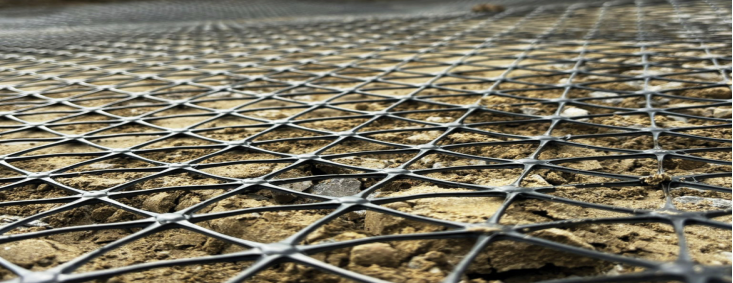
PP Biaxial Geogrid VS Triaxial Geogrid
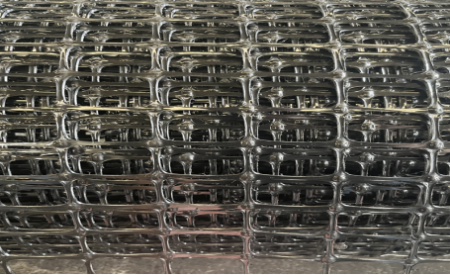
PP Biaxial Geogrid: Best for stabilizing soft subgrades and reinforcing layered systems where the primary forces are in two, perpendicular directions (e.g., roads, foundations, retaining walls). It acts like a stiff,high-tensile reinforcement.
Triaxial Geogrid: Best for base course reinforcement over stable subgrades, especially where loads are multi-directional. It excels at confinement and interlock within granular aggregates, distributing loads more efficiently. It is the modern standard for paved and unpaved roads.
Difference of PP Biaxial Geogrid and Traxial Geogrid
| Product Name | PP Biaxial Geogrid | Triaxial Geogrid |
| Material & Structure | Polypropylene (PP). Punched sheet, drawn into a rectangular aperture grid. | Typically Polypropylene (PP) or Polyethylene (PE). Punched sheet, drawn and oriented into a stable, triangular aperture grid. |
| Aperture Shape | Rectangular or Square. | Triangular (Hexagonal). |
| Mechanical Action | Tensile Reinforcement & Separation. Provides high tensile stiffness in two main directions (machine & cross-machine). | Multi-directional Confinement & Interlock. Provides stiffness in multiple directions, offering superior radial stiffness. |
| Primary Function | Carries tensile loads to reduce deformation and improve overall stability. | Improves the performance of the aggregate layer itself by mechanically stabilizing it through confinement. |
| Key Property | High Tensile Modulus at low strain (e.g., 2% strain). | In-plane Stiffness and Aggregate Interlock. |
| Load Distribution | Good in two primary directions. | Excellent and uniform in all directions. More efficient at distributing loads, reducing vertical stress on the subgrade. |
| Applications | •Soil Reinforcement for Retaining Walls & Steep Slopes • Foundations over soft soil • Subgrade Stabilization | •Base Reinforcement for Paved & Unpaved Roads •Railway Ballast •Working platforms over stable subgrade •Applications with multi-directional traffic (e.g., parking lots, intermodal yards) |
| Advantages | •High tensile strength in primary directions. •Excellent for long-term reinforcement under constant load. •Cost-effective for its target applications. | • Reduces rutting more effectively. • Allows for reduced aggregate thickness. • Performs better under dynamic/cyclic loading. • Excellent resistance to installation damage. |
In-Depth Explanation
1. PP Biaxial Geogrid
•How It Works: The manufacturing process (punching and drawing) aligns the polymer molecules, creating a very stiff grid with high tensile strength in its two primary directions. When placed between two layers (e.g., between soft subgrade and a gravel base), it:
1.Separates the layers, preventing the intermixing of soils.
2.Resists Tensile Forces. As the soft soil beneath tries to deform, it induces tensile strain in the geogrid. The geogrid’s high stiffness resists this strain, spreading the load over a wider area via “membrane support.”
2. Triaxial Geogrid
•How It Works: The key is the triangular aperture geometry. This shape is inherently more stable and provides radial stiffness (stiffness in all directions in the plane of the grid. Its primary mechanism is confinement:
1.Mechanical Interlock: The angular aggregate particles partially penetrate the apertures and lock into place.
2.Confinement: The geogrid’s ribs prevent the aggregate particles from moving laterally when a load is applied. This confinement dramatically improves the bearing capacity of the aggregate layer itself, turning it into a “mechanically stabilized layer.”
3.Improved Load Distribution: The multi-directional stiffness distributes wheel loads through a wider angle, reducing the pressure reaching the weak subgrade.
Conclusion:
The choice is not about which product is “better” in an absolute sense, but which one is more effective for the specific engineering mechanism you require.
•For tensile reinforcement against global instability (walls, slopes, very soft ground), choose PP Biaxial Geogrid
. •For lateral confinement and stabilization of a granular layer (pavement base, working platforms), choose Triaxial Geogrid.
Keywords:
1. PP Geogrid
What’s Steel Plastic Geogrid Composite Geotextile?
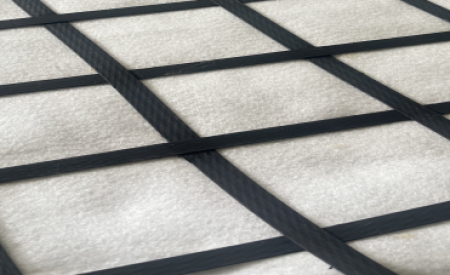
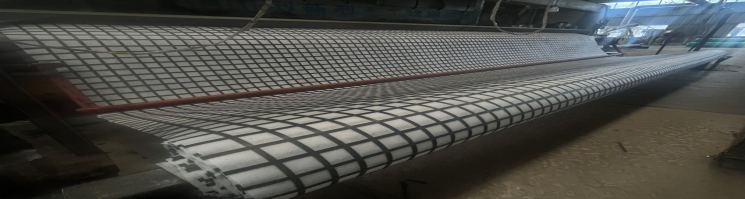
Lianyi®Steel plastic geogrid composite geotextile is a high-performance geosynthetic material manufactured through advanced composite technology. It perfectly combines the high strength of steel plastic composite geogrid with the multi-functionality of geotextile, achieving an integrated function of “reinforcement, isolation, filtration and drainage”.Steel plastic geogrid composite geotextile has outstanding advantages such as fast construction, reliable quality and high comprehensive benefits, and is an important tool for solving complex foundation problems in modern civil engineering construction.
Core Structure and Composition
This material is usually composed of a three-layer structure, like a “sandwich” :
1.Core layer (reinforcing layer) : steel plastic composite geogrid
Material: With high-strength steel wire or iron wire as the core, and wrapped with polyethylene (PE) or polypropylene (PP) plastic on the outside to prevent corrosion.
Function: It provides extremely high tensile strength and shear strength at nodes, serving as the “skeleton” of the material and undertaking the primary reinforcing function.
2.Upper and lower layers (functional layer) : geotextile
Material: Usually needle punched nonwoven geotextile (polyester or polypropylene).
Function: It provides isolation, filtration, drainage (reverse filtration), protection and other functions.
3.Composite process
Geotextiles are firmly bonded to one or both sides of the steel plastic composite grid through processes such as thermal lamination, adhesive bonding or needling
Advantages Of Steel Plastic Geogrid Composite Geotextile
1.Integrated functions, effect 1+1>2:
*Reinforcement + isolation: One-time laying, simultaneously achieving the functions of reinforcement and stability as well as preventing the mixture of different soil layers.
*Reinforcement + filtration and drainage: While reinforcing, ensure that water in the foundation can be smoothly discharged laterally without soil particles being lost, maintaining the long-term stability of the structure.
2.Convenient construction and controllable quality
*The cumbersome process of laying geogrid and geotextiles layer by layer on site has been eliminated, and the construction efficiency has been greatly improved.
*Steel plastic geogrid composite geotextile avoids problems such as inaccurate positioning and material damage that may occur during on-site laying, making it easier to ensure the quality of the project.
*The integrated structure is easier to tension during laying and can immediately exert a reinforcing effect.
3.Performance enhancement
*Geotextile provides certain additional protection for the plastic coating of steel plastic geogrid
*The integrity after compounding is better, and the interlocking friction force with the soil is greater.
Applications Of Steel Plastic Geogrid Composite Geotextile
*Soft soil foundation treatment: Steel plastic geogrid composite geotextile is used for soft foundations in highways, railways, airports, ports, etc., to enhance bearing capacity and prevent settlement and collapse.
*Reinforced soil retaining wall/slope: As a reinforcing material,Steel plastic geogrid composite geotextile also ensures smooth drainage behind the wall, making it an ideal choice for constructing high and steep, stable structures.
*Reinforcement of embankments and riverbanks: Enhance the stability of embankments while preventing soil erosion.
*Large station foundations: such as container yards, logistics parks, parking lots, etc., bear heavy and repeated loads.
*Environmental protection projects: such as the base layer of landfill sites and the covering system for site closure, need to have the functions of reinforcement, isolation and protection simultaneously.
Keyword:
1. Welded Geogrid
4. Geotextile
What’s Steel Plastic Composite Geogrid?
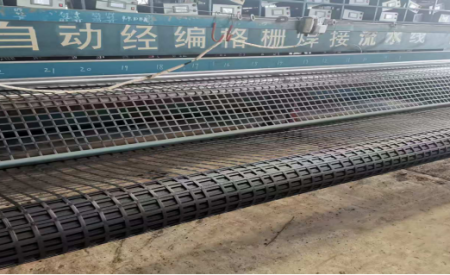
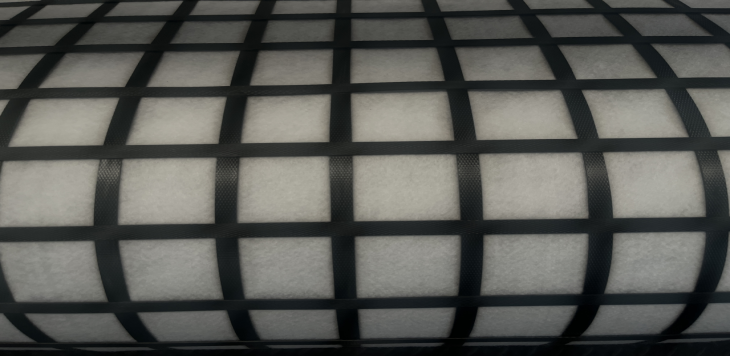
Lianyi®Steel plastic composite geogrid is a geosynthetic material with high-strength steel wire (or other metal wire) as the core load-bearing material, wrapped with plastic protective layers such as polyethylene (PE) or polypropylene (PP) on the outside, and made into a geogrid-like structure through precise processes (such as welding)
Steel plastic composite geogrid design ingeniously combines the high strength of metal with the corrosion resistance of plastic,the popular type 100-100kN/m,mesh size 75*75mm.
Features Of Steel Plastic Composite Geogrid
*Core force-bearing unit: The steel wire inside. This endows the grating with extremely high tensile strength (typically up to over 100 kN/m, far exceeding that of pure plastic geogrid)
*Protective layer: The plastic covering the outside.Its main function is to prevent corrosion and rust, ensuring that the internal steel wire can work stably for a long time in damp, acidic or alkaline soil environments and extending its service life.
*Node structure: Steel wires are strongly welded at the intersection points to form a firm and rigid node. This is the key to the superior performance of steel-plastic composite geogrid, It can ensure that it will not tear at the point of force application, and the force can be effectively transmitted and dispersed
.
Advantages Of Steel Plastic Composite Geogrid
Compared with pp geogrid, fiberglass geogrid,etc., steel plastic composite geogrid have the following outstanding advantages
*Ultra-high strength and low creep: It has extremely high tensile strength and small deformation (low creep) under high loads, providing long-term stable reinforcement.
*Outstanding durability: The plastic coating effectively resists chemical and electrochemical corrosion in soil and water, with a long designed service life.
*Rigid nodes with strong interlocking force: The interlocking and interlocking effect with the soil is excellent, which can maximize the self-strength of the soil and form a stable complex.
*Easy to install: It is relatively light in weight, easy to cut, connect and lay.
Applications Of Steel Plastic Composite Geogrid
The core function of steel plastic composite geogrid is “reinforcement”, that is, it utilizes its high tensile strength to withstand tensile stress in the soil, thereby enhancing the stability and load-bearing capacity of the soil. Mainly applied to:
1. Soft soil foundation treatment
*Scene: Soft foundations beneath highways, railways, airports, and port terminals.
*Function: Disperse the load, reduce uneven settlement, and prevent pavement cracking.
2. Reinforced soil retaining wall
*Scene: Cutting or embankment retaining walls of highways and railways, landscape retaining walls.
*Function: As a reinforcing bar, it works in conjunction with the panel and backfill soil to form stable upright or steep walls, saving land and earthwork.
3. Slope reinforcement and slope protection
*Scene: Roadbeds, reservoirs, and slopes of rivers.
*Function: Enhance the stability of slopes, prevent landslides and erosion, and allow for the construction of steeper slopes.
4. Large-scale ground foundation reinforcement
*Scene: Container yard, logistics park, parking lot, freight yard.
*Function: It can withstand the repeated loads of heavy containers and vehicles, prevent ground subsidence and surface layer damage.
Keyword:
1. Welded Geogrid
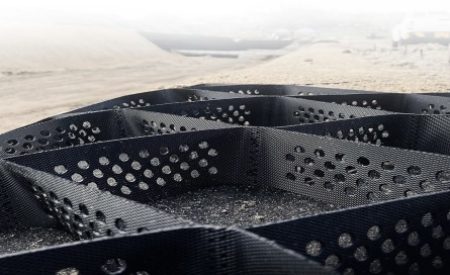
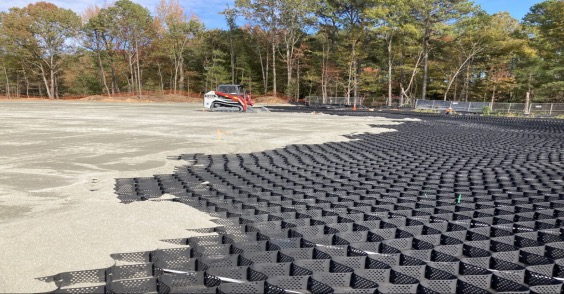
Lianyi®HDPE Geocell is a connected HDPE sheet/strip with a strong three-dimensional shape resembling a wasp nest that ties together, holds and stabilizes the soil. After geocell is filled with material, the geocell will prevent mass movement and increase the material stiffness.The layer on geocell will form a rigid and strong layer of structure so that it will resist the load laterally
*HDPE Geocell features free expansion and contraction, can be folded during transportation, and can be stretched into a grid during construction. When filled with loose materials such as soil, crushed stones, and concrete, it forms a structure with strong lateral restraint and high rigidity.
*HDPE Geocell is lightweight, wear-resistant, chemically stable, resistant to light and oxygen aging, acid and alkali resistant, and suitable for different soil and desert conditions.
*HDPE Geocell has high lateral restraint and anti-skid, anti-deformation, effectively enhancing the bearing capacity of the roadbed and the load dispersion effect.
*By altering the geometric dimensions such as the height and weld spacing of geocell, different engineering requirements can be met.
*HDPE Geocell can be extended and retracted freely and has a small transportation volume. Convenient connection and fast construction speed
*On the slope, geocell can prevent soil surface erosion
*On the road body, geocell can stabilize and increase the carrying capacity of soft subgrade
*Drainage protection
*Geocell has better carrying capacity and distributed loads
*Geocell is easy and fast to install
*Durable
*Retaining wall
*Basal reinforcement
*Slope stability
*Tree root protection
*Road construction
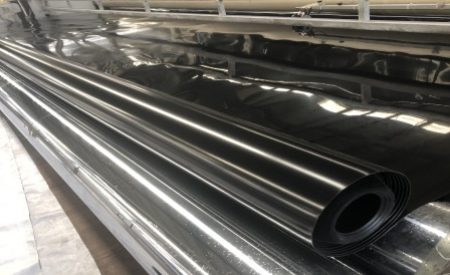
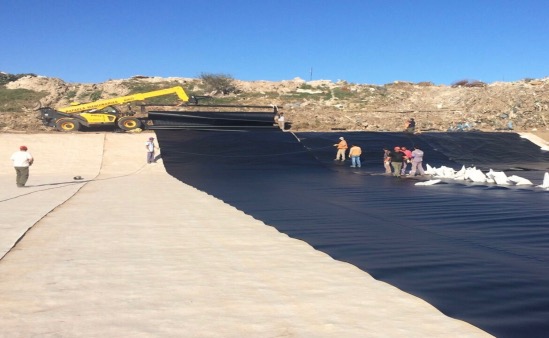
Lianyi®HDPE Geomembrane is made from the highest quality resin of High Density Polyethylene(HDPE), so it can meet the needs of very high material specifications as a safe containment system. This material is manufactured with strictly computerized quality control as the manufacturer guarantee all of quality with a civil responsibility insurance,
*HDPE Geomembrane has high resistant to chemicals,acids,and wastes,making it suitable for groundwater protection applications against all kinds of wates.
*HDPE Geomembrane also resistant to ultraviolet and extreme temperature changes so it also can be exposed safely for water reservoirs application.
*The flexibility of HDPE Geomembrane is ideal for highly contoured application like hills, detailed pools, and soil surface that could have a differential settlement.
*HDPE Geomembrane is available in both smooth and textured surfaces, and is also available in various thicknesses.
Advantages Of HDPE Geomembrane
*HDPE Geomembrane is known for its large strength to density ratio
*The density of HDPE Geomembrane can range from 930 to 970 kg/m3
*Although the density of HDPE Geomembrane is only marginally higher than that of low-density polyethylene, HDPE Geomembrane has little branching, giving it stronger intermolecular forces and tensile strength than LDPE.
*The difference in strength exceeds the difference in density, giving HDPE geomembrane a higher specific strength.
*HDPE Geomembrane is also harder and more opaque and can withstand somewhat higher temperatures.
Applications Of HDPE Geomembrane
*Landfill
*Water treatment plant
*Clean water reservoir
*Road construction on expansive
*Anti-seepage of the bottom lining of tailings
*Fishpond, swimming pool