Call us today!

Extending the lifespan of geosynthetics is not just about careful installation or selecting the thickest product. From over fifteen years of working with geogrids, geotextiles, and geomembranes across global infrastructure projects, I have seen that the single most influential factor in long-term durability is what happens before the material ever reaches the jobsite. Manufacturing quality, raw material selection, and rigorous quality management systems set the baseline that installation and environmental protection can only maintain. This article outlines the material and manufacturing decisions that most directly determine geosynthetic service life, and how to evaluate a supplier’s quality commitment before making a purchase.
Material Selection Sets the Baseline for Geosynthetic Lifespan
The polymer base of a geosynthetic governs how it responds to load, temperature, and chemical exposure over decades. HDPE geogrids, for instance, offer exceptionally low creep under sustained loads, making them a preferred choice for reinforced soil walls and slopes where deformation must remain minimal. Fiberglass geogrids provide high tensile strength with almost no elongation, which is critical for asphalt reinforcement to prevent reflective cracking. In contrast, PP-based geogrids and geotextiles, while economical, require careful evaluation of their long-term tensile behavior in high-temperature environments.
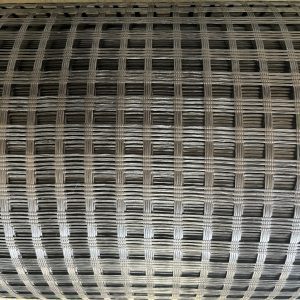
The table below compares material characteristics that influence service life.
| Material | Typical Tensile Strength (kN/m) | UV Resistance | Creep Behavior | Best Use |
|---|---|---|---|---|
| HDPE Uniaxial Geogrid | 50–200 | Excellent (with carbon black) | Very low | Retaining walls, steep slopes |
| Fiberglass Geogrid | 30–200 | Good (coated) | Nearly zero | Asphalt reinforcement, crack prevention |
| Basalt Geogrid | 30–100 | Excellent (natural mineral) | Very low | Marine and chemically aggressive soils |
| PP Biaxial Geogrid | 20–40 | Moderate (requires stabilizer) | Moderate | Temporary access roads, low-load applications |
| PET Nonwoven Geotextile | N/A (separation/filtration) | Poor (must be covered) | Low | Drainage, filtration, cushion |
Choosing a fiberglass geogrid with an appropriate coating or an HDPE product with certified UV stabilizer packs decades of advantage into the initial material decision. When I review project specifications, the failure to match polymer type to the expected chemical environment is the most frequent root cause of early degradation I encounter.
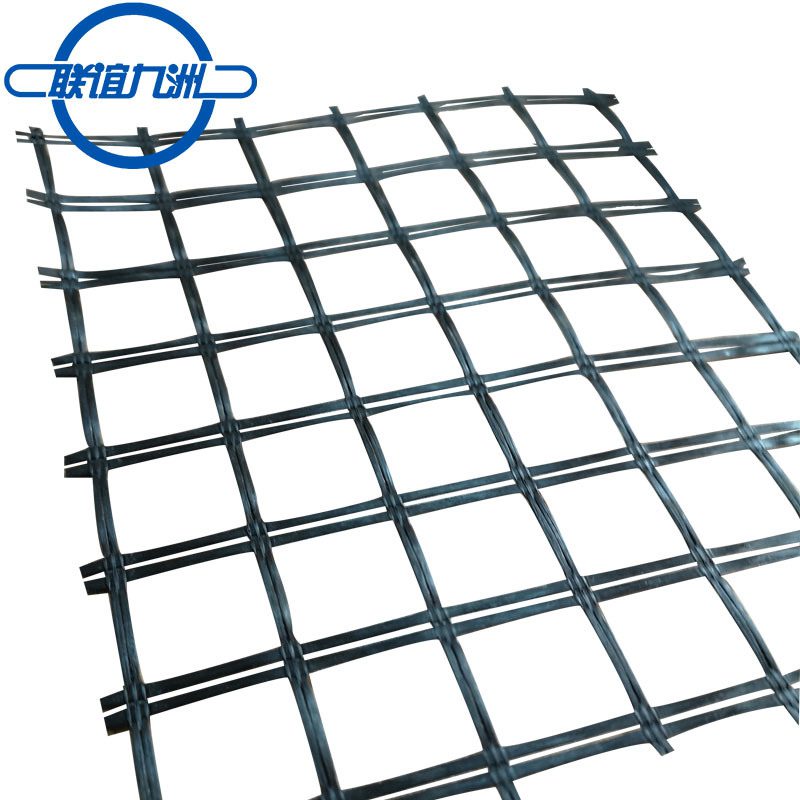
How Certified Manufacturing Standards Extend Service Life
Manufacturing quality is not an abstract concept; it is documented through internationally recognized certification systems that verify process control, material traceability, and performance consistency. ISO 9001:2015 certification, for example, forces a manufacturer to maintain documented procedures for incoming raw material testing, in-process dimensional checks, and final tensile strength verification. Without such systems, batch-to-batch variability in elongation at break or junction strength can cut effective lifespan by decades.
Third-party testing by bodies like SGS and TRI provides an independent audit layer. For HDPE geomembranes, SGS commonly tests for stress crack resistance (notch constant tensile load, ASTM D5397) and carbon black dispersion. A test report that shows uniform dispersion and >1,000-hour failure time is a direct predictor of extended service life. In contrast, sheets from uncontrolled production may fail the same test within 200 hours, invisible to the naked eye at installation but translating into liner breach within five to ten years.
The table below maps certifications to the durability attributes they validate.
| Certification / Testing Body | What It Validates for Geosynthetics |
|---|---|
| ISO 9001:2015 | Process consistency, raw material traceability, dimensional control |
| CE Marking | Compliance with EU performance standards (tensile, elongation, durability) |
| SGS / TRI Testing | Independent verification of physical properties and chemical resistance |
| ISO 14001:2015 | Environmental management of production, relevant for eco-sensitive projects |
I have personally reviewed geogrid samples from factories without formal quality management where tensile strength varied by over 12% between rolls from the same production run. That degree of inconsistency makes accurate lifespan prediction impossible. A supplier with certified systems can provide a certificate of analysis with every shipment, turning a quality risk into a documented asset.
Proper Installation Preserves Long-Term Performance
Even the best-manufactured geosynthetic will fail early if installed against sharp subgrade projections, with insufficient overlap, or under excessive construction traffic. For woven geotextiles used in separation functions, the subgrade must be cleared of angular rocks larger than the fabric’s puncture resistance threshold. I have seen projects where bypassing this step caused immediate tear propagation during aggregate placement, compromising the separation layer before the pavement section was even complete.
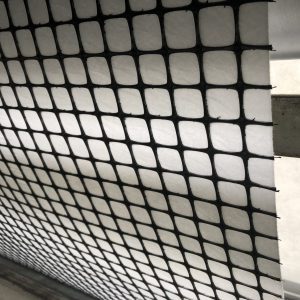
Key installation actions that protect service life include: 1) compacting and profiling the subgrade to remove surface irregularities; 2) maintaining a minimum overlap of 300 mm for woven geotextiles and 500 mm for nonwoven geotextiles in soft ground; 3) placing a cushion geotextile beneath geomembrane liners to prevent point-loading from coarse subgrade; 4) backfilling geogrid-reinforced soil in compacted lifts without allowing tracked vehicles to operate directly on the reinforcement layer. Each of these steps prevents a localized stress concentration that would otherwise initiate progressive creep failure.
If your site conditions involve variable fill material and the overlap and anchorage requirements are uncertain, confirm those parameters against a pull-out test or site-specific design review. Our team regularly performs these assessments and can be reached at [email protected] to discuss your cross-section and expected traffic loads.
Environmental Protection Extends Field Lifespan
UV radiation, oxidation, and chemical attack are the primary environmental degradation mechanisms for synthetic polymers. HDPE geomembranes commonly contain 2–3% carbon black to provide UV shielding and resist oxidation; a well-formulated sheet can withstand over 20 years of direct exposure before losing significant mechanical properties. Geotextiles made from PP or PET fibers require chemical stabilization packages, and their typical design life under full burial may exceed 75 years, but only if they are protected from sunlight during storage and construction.
In one landfill project where we supplied HDPE geomembrane with 100% virgin resin and a validated antioxidant package, the liner remained flexible and crack-free after ten years of service, as confirmed by core sampling. A neighboring cell that used a lower-cost liner with unspecified recycled content required a full replacement within seven years. The difference lay entirely in the material quality and manufacturing controls behind the initial product.
A practical rule: limit on-site storage exposure for any rolled geosynthetic to less than two weeks unless the product is specifically UV-stabilized for extended exposure. Even then, cover the stockpile with an opaque tarp to cut cumulative radiation dose.
Choosing a Supplier with Verifiable Quality Systems
A supplier’s ability to provide consistent, documented quality over time is as important as the specifications of any single product. When a project requires multiple geosynthetic types (geogrid, geotextile, geomembrane, geocomposite), sourcing from a single manufacturer with a comprehensive product range eliminates compatibility risks and simplifies technical documentation.
Evaluate potential suppliers on three points: the scope of their ISO certification (does it cover all product lines and relevant testing), the availability of third-party test reports for the specific grades you intend to purchase, and their willingness to provide technical support during installation. A manufacturer that treats quality management as a core engineering function, rather than a paperwork exercise, will have dedicated quality engineers and an in-house lab capable of generating the data you need.
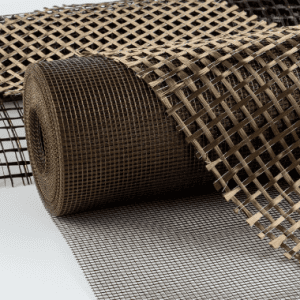
Our ISO 9001:2015 system at Lianyi covers the entire production chain from raw material sampling through to final roll inspection, and every shipment includes a certificate of analysis with measured tensile strength, elongation, and coating weight. For infrastructure owners and contractors, this documentation supports long-term warranty claims and provides a traceable record for asset management.
Extending geosynthetic lifespan starts with the manufacturer. Request technical proposals that include certified test data and quality management records before you finalize your purchase. Contact our engineering team at [email protected] or call +86 19153868161 to get specification-matched solutions backed by ISO and SGS certifications.
Common Questions About Prolonging Geosynthetic Service Life
What is the typical lifespan of a properly specified geotextile?
A well-manufactured, properly installed geotextile used in a buried separation or filtration application has a design life of 50–100 years, depending on the polymer and soil environment. For example, PET continuous-filament nonwoven geotextiles show excellent long-term tensile retention in neutral pH, while PP-based fabrics require careful antioxidant verification for high-temperature or chemically active soils. The key is matching the polymer to the site conditions, not assuming all products deliver the same longevity.
Do all geosynthetics require UV protection?
Most synthetic polymers degrade when exposed to UV radiation without protection. HDPE geomembranes rely on carbon black for shielding, and many geotextiles include UV stabilizers. However, protection is time-limited: even stabilized products should not sit uncovered on-site for more than a few weeks. In my experience, a routine practice of covering stockpiles with opaque tarps and limiting storage time does more for long-term durability than over-specifying UV additive packages alone.
How can I assess whether a manufacturer’s quality claims are real?
Request the current ISO 9001 certificate and verify its scope includes the specific geosynthetic category you intend to buy. Ask for third-party test reports from an accredited laboratory (such as SGS or TRI) for the production batch under consideration. If possible, arrange a factory audit to see the quality management system in operation. Independent testing, not marketing language, is the only reliable indicator of consistency and long-term performance.
Is there a trade-off between high strength and durability?
Not necessarily. HDPE uniaxial geogrids deliver both high tensile strength and low creep, making them suitable for demanding reinforcement applications. Basalt geogrids combine high mechanical strength with inherent chemical resistance. The trade-off, if any, is in material cost upfront, but over a design life of 50 years or more, the incremental cost of a higher-quality polymer is negligible compared to the expense of early replacement or remediation.
What documentation does Lianyi provide with each shipment?
Each order includes a certificate of analysis showing measured tensile strength, elongation at break, and coating or carbon black content, along with relevant ISO and SGS declarations. This documentation supports incoming inspection and can be archived as part of the project quality record. Share your requirements and we will confirm the specific compliance documents available for your application.
If you’re interested, check out these related articles: