Call us today!

Water containment sounds straightforward until you actually try to keep millions of gallons in place for decades. The engineering gets complicated fast, and the consequences of getting it wrong show up in contaminated aquifers, regulatory nightmares, and remediation costs that dwarf the original project budget. What follows covers the material science, installation realities, and application-specific considerations that determine whether a geomembrane system holds up or becomes an expensive lesson.
Why Water Containment Systems Fail and What Actually Works
Reliable water infrastructure matters more now than at any point in recent memory. Agricultural operations, waste management facilities, mining sites, and municipal water systems all depend on containment that performs without drama for twenty, thirty, sometimes fifty years. When these systems fail, the damage spreads quickly. Groundwater contamination can persist for generations. Cleanup costs routinely exceed the original construction budget by factors of ten or more. Regulatory penalties add another layer of financial pain.
Geosynthetic barriers address these challenges through engineered impermeability. The technology has matured considerably over the past few decades, but material selection and installation quality still determine outcomes more than any other factors.
How Geomembrane Barriers Actually Work
The basic principle is simple: create a continuous synthetic layer that liquids and gases cannot penetrate. The execution requires understanding polymer chemistry, mechanical stress, and environmental degradation pathways.
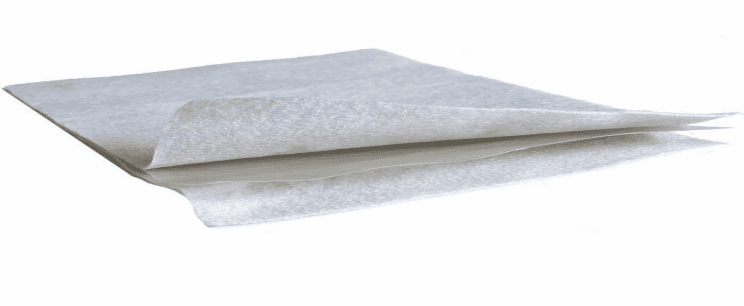
Modern geomembrane systems rarely consist of a single layer. A typical high-performance installation includes a primary geomembrane, often backed by a geosynthetic clay liner and protected by geotextile fabric. Each layer serves a specific function. The primary membrane provides the impermeable barrier. The clay liner offers redundancy and self-healing properties if minor damage occurs. The geotextile protects against puncture from subgrade irregularities.
The molecular structure of the polymer determines impermeability. High-density polyethylene packs molecules tightly enough that water molecules cannot find pathways through the material. Chemical resistance comes from the same structural characteristics that provide impermeability.
Choosing Materials That Last
Material selection drives long-term performance more than any other decision. Each polymer type brings specific strengths and limitations.
| Material Type | Key Properties | Typical Applications |
|---|---|---|
| HDPE Geomembrane | Excellent chemical resistance, high tensile strength, UV stable | Landfills, mining, wastewater ponds |
| LLDPE Geomembrane | High flexibility, puncture resistance, conforms to irregular surfaces | Decorative ponds, canals, covers |
| PVC Geomembrane | Good flexibility, ease of welding, moderate chemical resistance | Smaller ponds, temporary liners |
HDPE Geomembrane products manufactured from pure high-density polyethylene resin resist environmental stress cracking and chemical attack better than alternatives. The tradeoff is reduced flexibility, which matters when subgrade conditions are less than ideal. LLDPE Geomembrane materials offer the flexibility needed for complex geometries and sites where differential settlement is expected. UV resistance formulations extend service life for exposed applications.
Where Geomembranes Solve Real Problems
The versatility of geomembrane technology shows up across industries with very different containment requirements.
Landfill operations depend on liner systems to prevent leachate migration. The chemistry of landfill leachate varies widely and changes over time as waste decomposes. HDPE handles this variability better than most alternatives.
Mining applications present their own challenges. Heap leach pads contain highly acidic solutions that would destroy most materials. Tailings impoundments must contain fine sediments and process water for extended periods. The combination of chemical exposure and mechanical stress from heavy equipment requires careful material specification.
Agricultural reservoirs and irrigation canals need containment that handles UV exposure, thermal cycling, and occasional mechanical damage from maintenance equipment. The economics of agricultural water storage favor materials that balance performance with cost.
Aquaculture installations require impermeable barriers that maintain water quality while withstanding the biological activity inherent in fish farming operations. Pond liners must resist algae growth, fish waste chemistry, and the mechanical stress of harvesting operations.
Installation Quality Determines Everything
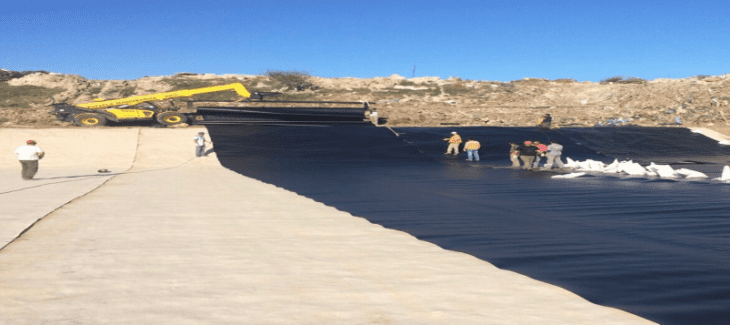
The best geomembrane material fails if installation is poor. Welding technique, subgrade preparation, and quality control testing separate successful projects from expensive failures.
| Critical Installation & QC Steps | Description | Importance for Longevity |
|---|---|---|
| Subgrade Preparation | Smooth and compact subgrade | Prevents liner damage from sharp objects |
| Panel Placement | Proper overlap and alignment | Ensures continuous barrier integrity |
| Geomembrane Welding | Dual-track fusion welding | Creates strong, impermeable seams |
| Non-Destructive Testing | Air pressure, vacuum box tests | Verifies weld integrity without damage |
| Destructive Testing | Peel and shear tests | Quantifies weld strength and material bond |
Dual-track fusion welding creates two parallel seams with an air channel between them. This channel allows pressure testing of every linear foot of weld without damaging the liner. Vacuum box testing catches defects in areas where fusion welding is not practical.
Destructive testing sacrifices small samples to verify that weld strength meets specifications. The tradeoff between testing thoroughness and material waste requires judgment based on project criticality.
Designing Systems That Protect Groundwater
Groundwater protection demands more than a single barrier. Multi-liner systems with leak detection provide the redundancy needed for high-consequence applications.
The typical configuration places a primary geomembrane over a drainage layer, which sits above a secondary geomembrane. Leak detection systems monitor the drainage layer for any liquid accumulation. Early detection allows intervention before contamination spreads.
Penetrations through the liner system require special attention. Pipes, conduits, and structural connections create potential leak paths that must be sealed with compatible materials and tested thoroughly.
Environmental Benefits Beyond Containment
Geomembrane systems contribute to environmental protection in ways that extend beyond their primary containment function.
Preventing contamination eliminates the need for remediation, which typically requires far more resources than proper containment in the first place. Excavation, treatment, and disposal of contaminated soil consume energy, generate emissions, and create secondary waste streams.
Water conservation benefits from reduced seepage losses. Irrigation canals lined with geomembranes deliver more water to crops than unlined alternatives. Reservoir storage efficiency improves when evaporation is the only loss pathway.
Regulatory compliance becomes straightforward when containment systems meet or exceed design specifications. The documentation generated during quality control testing provides evidence of due diligence that regulators expect.
Matching Materials to Project Requirements
Project-specific factors determine optimal material selection. Site conditions, chemical exposure, mechanical stress, and design life all influence the decision.
Large-scale hazardous waste containment typically requires HDPE for hazardous waste geomembranes because chemical resistance and durability matter more than flexibility. The subgrade preparation for these projects justifies the additional cost of creating smooth surfaces that accommodate less flexible materials.
Projects with irregular geometries or expected settlement benefit from LLDPE for flexible applications materials that conform to changing conditions without stress cracking. Decorative ponds, canal linings, and cover systems often fall into this category.
If you are interested, check 《The Difference Of Geomembrane And Composite Geomembrane》.
Frequently Asked Questions About Geomembrane Water Protection
What factors are critical for ensuring the long-term performance of geomembranes in water containment?
Long-term performance depends on material quality, appropriate selection for site-specific conditions, installation technique, and quality control rigor. UV resistance matters for exposed applications. Chemical compatibility must match the contained substances. Puncture resistance protects against subgrade irregularities and maintenance activities. These factors interact, so getting one right while neglecting others still leads to premature failure.
How do advanced geomembrane systems prevent groundwater contamination effectively?
Multi-layer systems provide the redundancy that single barriers cannot. A primary geomembrane catches most potential leakage. A drainage layer between primary and secondary liners allows leak detection monitoring. The secondary geomembrane provides backup containment if the primary fails. Proper sealing around penetrations and rigorous weld testing complete the system. This layered approach catches problems early and prevents contamination from reaching groundwater.
Which specific geomembrane types are most suitable for different water protection applications?
HDPE Geomembrane materials work best for landfill liners, mining heap leach pads, and other applications where chemical resistance and durability outweigh flexibility requirements. LLDPE Geomembrane products suit decorative ponds, canals, and sites with irregular subgrades or expected settlement. The flexibility allows conformance to changing conditions without stress cracking. PVC materials serve smaller projects and temporary applications where ease of installation matters more than maximum durability.
What role does third-party certification play in geomembrane quality assurance for water protection projects?
Certifications like ISO 9001:2015, ISO 14001:2015, OHSAS 18001:2007, BV, SGS, and TRI verify that manufacturing processes meet international standards. These certifications provide independent validation that materials perform as specified. For water protection projects, certification documentation demonstrates due diligence to regulators and provides confidence that the installed system will deliver expected performance over its design life.
Partner with Feicheng Lianyi Engineering Plastics Co.,Ltd
Partner with Feicheng Lianyi Engineering Plastics Co.,Ltd for world-class geomembrane solutions. Our ISO-certified products and unparalleled expertise ensure superior, long-term water protection for your most critical projects. Contact us today for a comprehensive geosynthetics solution tailored to your needs. Mobile: +86 19153868161 | Email: [email protected]