Call us today!

Landfill containment has changed dramatically over the past few decades, and geomembranes sit at the center of that shift. What started as simple clay barriers has evolved into sophisticated multi-layer systems where synthetic liners do the heavy lifting. The technology works, but getting it right requires understanding both the materials and the conditions they’ll face underground for the next century or more.
Why Geomembranes Matter for Waste Containment
Geomembranes function as the primary barrier between landfill contents and everything beneath them. Their job sounds straightforward: stop liquids and gases from escaping. The reality gets complicated fast.
Leachate forms when rainwater percolates through waste, picking up dissolved organic matter, heavy metals, and other contaminants along the way. Without proper containment, this toxic soup migrates downward into aquifers that communities depend on for drinking water. A single breach can contaminate groundwater supplies for decades.
Gas containment presents its own challenges. Decomposing organic waste generates methane, a greenhouse gas roughly 80 times more potent than carbon dioxide over a 20-year period. Geomembranes trap these emissions, allowing collection systems to capture the gas for energy production or flaring.
The materials achieve this through extremely low permeability combined with resistance to chemical degradation. Modern formulations maintain their barrier properties even after prolonged contact with aggressive leachate chemistry. This dual functionality determines whether a landfill remains a contained system or becomes an environmental liability.
Matching Geomembrane Materials to Site Conditions
Material selection drives project outcomes more than most operators realize. Different polymer formulations respond differently to chemical exposure, temperature swings, and mechanical stress. Picking the wrong liner for site conditions leads to premature failure and expensive remediation.
High-Density Polyethylene dominates the market for good reasons. HDPE resists most chemicals found in municipal solid waste leachate and maintains structural integrity under sustained loading. The material works well in conventional landfill applications where chemical inertness matters most.
Linear Low-Density Polyethylene offers something HDPE cannot: flexibility. Sites with irregular subgrades or seismic concerns benefit from LLDPE’s ability to stretch without cracking. The material accommodates differential settlement that would stress rigid liners past their limits.
Flexible Polypropylene handles the toughest terrain conditions. When subgrade preparation cannot eliminate all irregularities, fPP’s superior elongation and puncture resistance provide additional safety margin. The material conforms to challenging surfaces without compromising barrier function.
Geosynthetic clay liners often work alongside polymer membranes in composite systems. The clay component provides secondary containment and self-healing properties that address minor defects in the primary liner.
Selecting the Right Geomembrane for Specific Landfill Conditions
Site assessment should guide material decisions rather than default choices. HDPE makes sense for most municipal solid waste applications where chemical resistance takes priority. LLDPE performs better where ground movement is expected or where subgrade conditions remain imperfect despite preparation efforts. fPP handles extreme terrain and applications demanding maximum conformability.
| Geomembrane Type | Key Property | Primary Application | Thickness Range (mm) |
|---|---|---|---|
| HDPE | Chemical Resist. | MSW, Hazardous Waste | 0.5 – 2.5 |
| LLDPE | Flexibility | Irregular Subgrades | 0.75 – 2.0 |
| fPP | Elongation | Challenging Terrain | 1.0 – 2.0 |
| GCL | Self-healing | Composite Liners | 6 – 10 |
Installation Methods That Determine Liner Performance
The best materials fail when installation goes wrong. Field conditions test both equipment and crew capabilities in ways that laboratory specifications cannot predict.
Site preparation establishes the foundation for everything that follows. Grading must achieve specified tolerances while compaction creates a stable surface. Sharp objects, roots, and angular stones require removal because they concentrate stress at single points. A small protrusion can puncture a liner under the weight of accumulated waste.
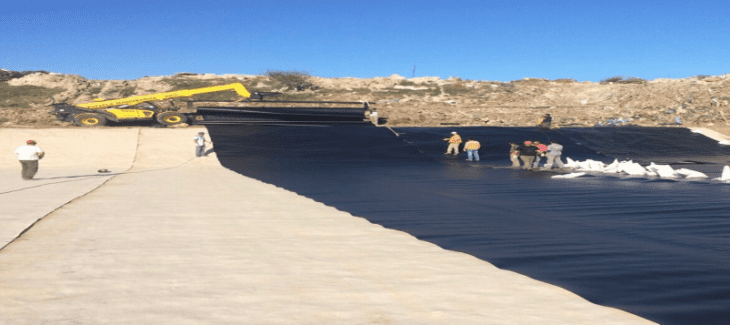
Panel deployment follows careful planning to minimize wrinkles and avoid stress concentrations at seams. Thermal expansion complicates matters since polyethylene expands and contracts significantly with temperature changes. Crews typically deploy liner during cooler morning hours when the material remains more manageable.
Welding creates the continuous barrier that makes individual panels function as a single system. Hot wedge welding uses heated elements to fuse overlapping panel edges, creating dual-track seams that can be tested for integrity. Extrusion welding handles detail work around penetrations and repairs. Both techniques demand skilled operators and properly calibrated equipment.
Quality verification catches problems before waste placement makes repairs impossible. Non-destructive testing methods like air pressure testing and vacuum box testing check seam integrity without damaging the liner. Destructive testing of coupon samples confirms that weld strength meets specifications. Documentation of all testing provides the record needed for regulatory compliance and future reference.
Maintaining Barrier Integrity Over Operational Lifespans
Landfills operate for decades and must maintain containment for centuries after closure. This timeline demands materials engineered for exceptional durability and systems designed for long-term monitoring.
UV radiation degrades exposed polyethylene, making timely waste coverage important for liner longevity. Chemical attack from leachate constituents tests material formulations continuously. Mechanical stresses from waste settlement and equipment traffic accumulate over time. Liners must withstand all these challenges simultaneously.
Certification standards provide baseline assurance of material quality. ISO 9001 addresses manufacturing quality systems while ISO 14001 covers environmental management. OHSAS 18001 certification demonstrates commitment to worker safety during production. These certifications indicate systematic approaches to quality rather than one-time compliance.
Post-closure monitoring detects problems before they become environmental incidents. Leak detection systems between liner layers identify breaches early. Groundwater monitoring wells around the facility perimeter confirm that containment remains effective. Regular inspections of exposed liner areas catch degradation before it compromises barrier function.
How Geomembranes Prevent Environmental Contamination
The mechanism is straightforward: physical separation combined with chemical resistance. Geomembranes create an impermeable boundary that leachate cannot penetrate under normal operating conditions. Their low permeability coefficients mean that even under hydraulic head from accumulated leachate, migration rates remain negligible.
Chemical resistance ensures that leachate contact does not degrade barrier properties over time. Properly selected materials maintain their impermeability despite decades of exposure to aggressive chemistry. This sustained performance protects groundwater resources and prevents soil contamination that would otherwise spread beyond facility boundaries.
Balancing Costs Against Long-Term Performance
Initial material costs represent a fraction of total project economics. Remediation expenses from liner failures dwarf the premium for higher-quality materials. Insurance costs, regulatory penalties, and community relations impacts add further weight to the case for superior containment systems.
Reduced maintenance requirements translate directly to operational savings. Liners that maintain integrity without intervention avoid the costs of repairs, monitoring intensification, and regulatory scrutiny that follow detected problems. Extended operational lifespans defer closure costs and maximize disposal capacity utilization.
Environmental benefits align with economic interests in this case. Preventing contamination avoids cleanup costs while protecting community health and natural resources. Regulatory compliance becomes simpler when containment systems perform as designed. The investment in quality materials and proper installation pays returns throughout the facility lifecycle.
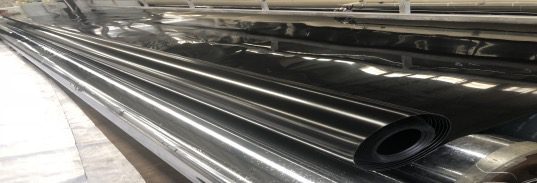
Where Geomembrane Technology Is Heading
Sensor integration represents the most significant near-term advancement. Embedded monitoring systems can detect liner stress, temperature anomalies, and moisture presence in real time. This capability transforms maintenance from reactive to predictive, catching problems before they become failures.
Material science continues advancing barrier performance. New formulations offer improved chemical resistance, greater flexibility, and enhanced longevity. Self-healing materials that can seal minor punctures autonomously are moving from research into practical application. These developments promise more robust containment with less reliance on perfect installation.
Sustainability considerations increasingly influence material selection. Recycled content in geomembrane formulations reduces virgin polymer demand. End-of-life recyclability becomes a factor as facilities eventually close and undergo final cover installation. The industry is moving toward solutions that address environmental concerns beyond just containment function.
Working with Lianyi on Geosynthetic Projects
Feicheng Lianyi Engineering Plastics Co.,Ltd provides geomembrane technology and geosynthetic solutions for demanding landfill applications. ISO certified manufacturing ensures consistent product quality across the full range of materials. Technical support helps match products to specific project requirements and site conditions. Contact the team to discuss your containment challenges. Email: [email protected] | Mobile: +86 19153868161
If you’re interested, check 《The Difference Of Geomembrane And Composite Geomembrane》.
Common Questions About Landfill Geomembrane Applications
What are the key benefits of using geomembranes in landfill construction?
Geomembranes create impermeable barriers that prevent leachate from reaching groundwater and contain landfill gas emissions. They provide long-term environmental protection, help facilities meet regulatory requirements, and maintain structural integrity of containment systems. The materials offer advantages over traditional clay lining methods including more consistent performance and easier quality verification during installation.
How do geomembranes prevent environmental contamination in waste disposal sites?
Physical separation does the primary work. Geomembranes isolate waste from surrounding soil and groundwater through their extremely low permeability. Chemical resistance ensures that leachate contact does not degrade barrier properties over time. Together, these characteristics contain pollutants within the designed disposal area and prevent migration into ecosystems beyond facility boundaries.
What types of geomembranes are best suited for different landfill conditions?
HDPE works well for most municipal solid waste and hazardous waste applications where chemical resistance matters most. LLDPE provides flexibility for sites with differential settlement concerns or irregular subgrades. fPP offers superior elongation and puncture resistance for challenging terrain conditions. Material selection should match specific site characteristics and waste types rather than following generic recommendations.