Call us today!

Keeping slopes stable and erosion in check is a constant battle, made tougher by heavier infrastructure use and harsher storms. Getting it right determines how long a project lasts and how safely it performs. We see the growing need for tougher erosion control and real innovation in geosynthetics. Lianyi focuses on geosynthetics with proven technologies built for these problems. Here, our experience lays out a clear comparison between modern geocell technology and conventional methods.
Understanding Traditional Slope Reinforcement Methods
Traditional slope stabilization has been used for centuries, with a range of approaches to control soil erosion and protect structural integrity. These options often call for large volumes of material and significant site preparation. Retaining walls rely on mass and rigidity to resist soil pressure. Riprap uses large, angular stone to dissipate water energy and shield exposed soil. Gabion baskets, wire mesh cages filled with rock, create flexible, permeable structures for erosion control and retaining applications. Soil nailing inserts steel bars into the slope face, then grouts them to form a reinforced soil mass. While each has its place, they often come with high material costs, long installation schedules, and notable environmental disturbance. Conventional slope protection can struggle to blend into the landscape over time and may demand considerable maintenance.
| Method | Primary Function | Key Limitation | Typical Lifespan |
|---|---|---|---|
| Retaining Walls | Structural support | High cost, rigid | 50-100 years |
| Riprap | Surface erosion control | Heavy, aesthetic impact | 20-50 years |
| Gabion Baskets | Erosion control, retention | Visual impact, potential rust | 30-70 years |
| Soil Nailing | Internal slope stability | Complex, specialized labor | 50-75 years |
Geocell Technology An Advanced Slope Stabilization Paradigm
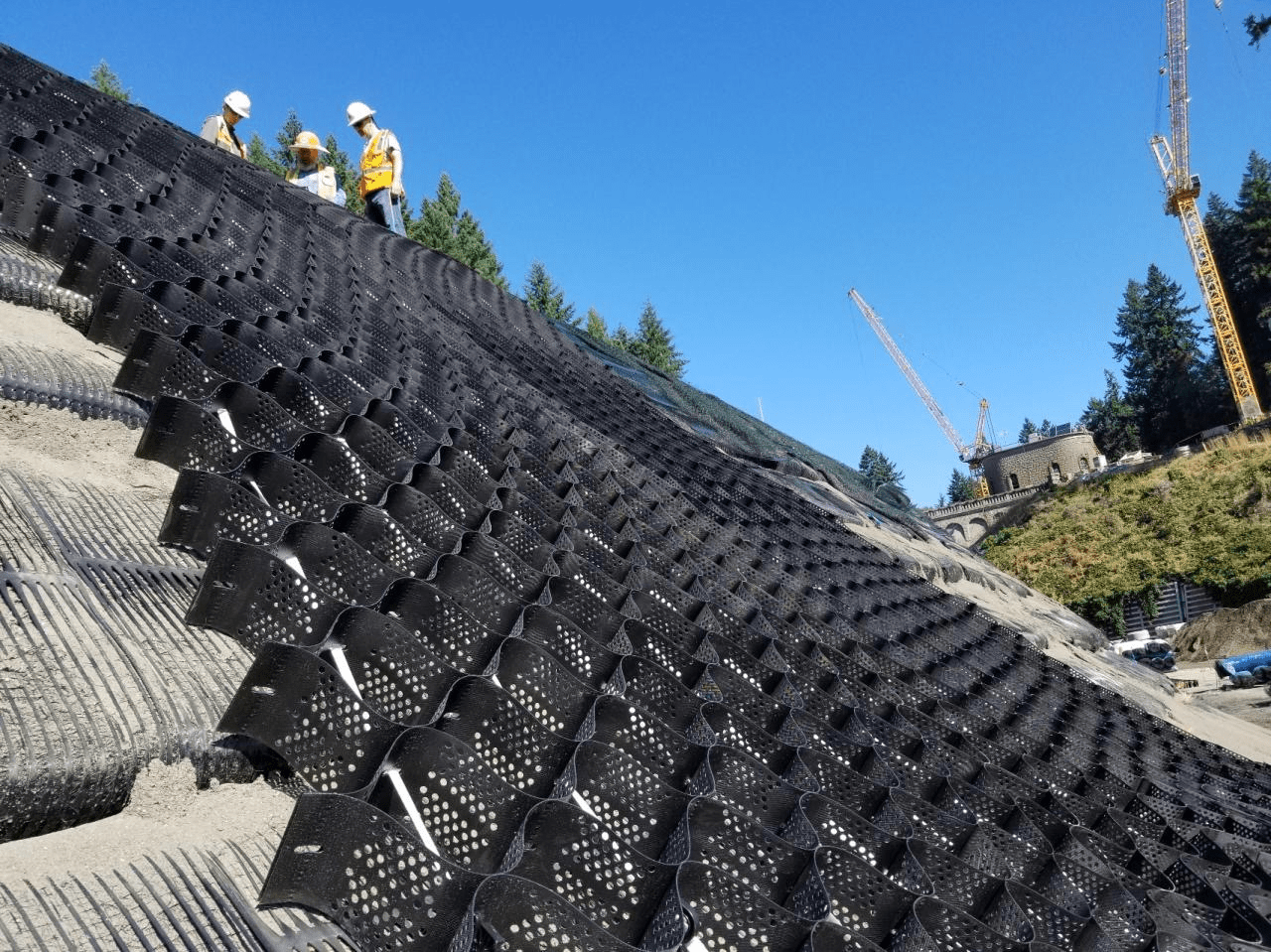
Geocell technology brings a step-change to slope stabilization through a unique cellular confinement system. Interconnected cells, usually made from high-density polyethylene (HDPE), confine the infill material. This three-dimensional matrix boosts shear strength and spreads loads within the soil or aggregate, preventing lateral movement of the infill and improving the stability of slopes, embankments, and channels. HDPE geocells deliver durability, UV resistance, and chemical inertness for long service life. Lianyi’s geocells are engineered with precision, often using a perforated geocell design to promote drainage and vegetation growth for stronger stability and environmental integration. The result is a composite structure with the infill that distributes loads over a wider area and reduces localized stress.
Long Term Performance Benefits of Geocell Systems
Geocell systems deliver strong long-term performance, extending slope lifespan and cutting maintenance needs. Cellular confinement raises the effective cohesion of infill materials, providing high resistance to erosion and deformation over decades. Our geocells, manufactured from high-quality, UV-stabilized HDPE, resist environmental degradation and maintain performance across varied climates. This inherent geocell durability reduces the frequency of repairs or replacements, driving down slope maintenance costs over the project’s lifecycle. The long term erosion resistance of geocell structures supports sustainable infrastructure.
Comparative Analysis Geocell Versus Traditional Solutions
A close comparison shows clear advantages for geocell technology over conventional methods across key measures. Geocell cost effectiveness often outperforms traditional solutions through lighter materials, lower transport demand, and faster installation. The environmental impact of slope solutions is lower with geocells, which support vegetation and reduce the use of non-renewable resources. Installation efficiency comparison consistently shows less heavy machinery and labor, enabling quicker completion. For slope stability performance metrics, geocells deliver superior load distribution and erosion control, especially on challenging gradients.
| Feature | Geocell | Traditional Methods (e.g., Riprap, Gabions) |
|---|---|---|
| Cost Effectiveness | Lower material & installation costs | Higher material & labor costs |
| Environmental Impact | Eco-friendly, supports vegetation | Resource-intensive, less aesthetic |
| Installation Time | Rapid, less heavy machinery required | Slower, more complex logistics |
| Durability | 50-75+ years (HDPE), UV stable | Varies, prone to weathering/corrosion |
| Performance | Excellent shear resistance, load distribution | Relies on mass, limited soil interaction |
Engineering and Environmental Advantages of Geocell
From an engineering standpoint, the three-dimensional cellular structure offers standout geocell load distribution capabilities, spreading concentrated loads over a wider area. This increases the bearing capacity of weak soils and raises the shear resistance of the slope, reducing localized failures. The system’s flexibility lets it conform to ground contours and accommodate differential settlement without losing integrity. Environmentally, geocells support vegetated slope stabilization, encouraging plant growth within the cells. This approach slows stormwater runoff, reduces soil loss, and filters pollutants, strengthening local ecosystems. The use of HDPE Geocell also reduces the need for non-renewable resources, leading to a reduced carbon footprint construction and supporting biodiversity friendly slope design.
Geocell Impact on Project Timelines and Installation Efficiency
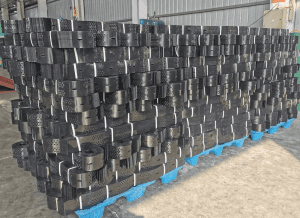
The modular, lightweight nature of geocell systems can shift project timelines in a meaningful way. Geocells arrive in compact, collapsible sections for easy transport and fast deployment. This modular slope protection system cuts down on heavy lifting equipment and extensive earthworks, translating into faster installation. The simplified workflow requires less specialized labor, lowering costs (labor cost reduction geocell). These efficiencies drive project schedule optimization, speeding completion and reducing overall construction costs.
Environmental Benefits of Geocell Systems for Slope Stabilization
Geocell systems deliver strong environmental benefits for slope work. They are eco friendly slope solutions that encourage vegetation establishment geocell within the cellular structure. This supports habitat creation, improves slope aesthetics, and enhances biodiversity. Geocells also aid stormwater management slopes by reducing runoff velocity and allowing infiltration, which minimizes soil erosion and limits sediment pollution in waterways. Their use often cuts aggregate demand and other non-renewable materials compared to traditional methods, shrinking material consumption and the overall ecological footprint.
Real World Applications and Case Studies
Geocell technology has shown reliable performance across varied real-world applications, often surpassing traditional solutions under tough conditions. In road construction, geocell road embankment projects improve stability and reduce long-term maintenance, especially over soft subgrades. In channel protection geocell use, the cellular confinement reduces scour and erosion while preserving hydraulic efficiency. Mining slope stabilization benefits from geocells that reinforce steep slopes and contain waste materials for long-term environmental safety. Landfill slope reinforcement applies geocells to stabilize cover systems and encourage vegetation, curbing erosion and supporting ecological recovery. These geocell project examples demonstrate the technology’s strength and adaptability.
Selecting the Optimal Slope Solution for Your Project
Choosing the right slope solution starts with a careful look at project needs and site conditions. Key slope design considerations include soil type, existing gradient, hydrology, and anticipated loads. Geotechnical engineering best practices call for a thorough site investigation to guide material selection and design parameters. Budget and environmental regulations also steer decisions. For projects needing high performance, ecological integration, and long-term stability, geosynthetic product selection, particularly HDPE Geocell, often proves superior. Consulting slope experts, such as those at Lianyi, helps tailor an effective and sustainable solution. We assist with the details to keep your project on track.
Partner with Lianyi for Advanced Geosynthetic Solutions
Advance your next infrastructure project with Lianyi’s world-class geocell technology and full-spectrum geosynthetic solutions. As a leading manufacturer with ISO 9001:2015, ISO 14001:2015, and OHSAS 18001:2007 certifications, we deliver high product quality, expert technical support, and tailored solutions for demanding slope stabilization and erosion control needs. Contact our specialists to discuss your project and discover the Lianyi advantage. Mobile: +86 19153868161 | Email: [email protected]
Frequently Asked Questions About Slope Stabilization
What is the typical lifespan of a geocell slope stabilization system?
Geocell systems, particularly those made from high-density polyethylene (HDPE), are engineered for exceptional durability and can have a design life exceeding 50 to 75 years, significantly outperforming many traditional methods in terms of long-term performance and reduced maintenance requirements. Lianyi’s geocells are UV stabilized for extended service life.
Can geocell be effectively used in steep or challenging slope conditions?
Yes, geocell technology is specifically designed for challenging terrains, including steep slopes, unstable soil conditions, and areas prone to severe erosion. Its cellular confinement structure provides excellent shear resistance and load distribution, making it a superior solution where traditional methods might fail or be impractical. It is a robust geosynthetic erosion control solution.
How does geocell installation compare to traditional methods in terms of time and cost?
Geocell installation is generally faster and more cost-effective than traditional methods. Its lightweight, collapsible nature allows for easy transport and rapid deployment, reducing labor requirements and heavy machinery usage. This efficiency often leads to significant savings in project timelines and overall construction costs, optimizing your budget for slope protection engineering.
What are the environmental benefits of choosing geocell over conventional slope protection?
Geocell systems offer substantial environmental advantages. They promote natural vegetation growth within their cells, enhancing biodiversity and slope aesthetics. They also reduce stormwater runoff velocity, minimize soil erosion, and decrease the need for non-renewable construction materials, contributing to sustainable infrastructure development and eco-friendly slope solutions.
Is geocell suitable for both temporary and permanent slope stabilization projects?
Absolutely. Geocell technology is highly versatile and can be adapted for both temporary erosion control measures during construction and permanent, long-term slope stabilization. The infill material and cell size can be customized to meet specific project requirements, ensuring optimal performance for various applications from temporary road embankments to permanent vegetated geocell slopes.